|
In middle school, I thought it would be cool to play a musical instrument and picked the clarinet. My wise parents rented one rather than buying it, and I started practicing. (In the garage because it sounded pretty screechy.) After a week or two of doing scales, I got bored and picked my way through a couple of easy songs. But after a few more weeks, I couldn't go further because I hadn't laid a foundation with scales and similar exercises - so I quit in frustration. To this day, I regret never learning to play a musical instrument.
I and others tend to skip over the fundamentals for a variety of reasons, including impatience, laziness, or a kind of arrogance that thinks we can sort of get away with not paying our dues. There's also the subtle impact of our media, which showcases celebrities who seem to spring out of thin air - though actually, it took years for them to become an overnight success.
But when we don't take care of the fundamentals, the foundation is shaky for whatever we've built: a relationship, a career, personal well-being, spiritual practice - or playing the clarinet. Perhaps we can get away with this for a while, but there's usually a background cost in uneasiness, waiting for a day of reckoning, perhaps with the sense of being an imposter. And eventually, when a real challenge comes, the building shakes and maybe topples.
On the other hand, when you handle the basics, the cornerstones, you feel like you're on solid ground. Even if things don't turn out perfectly, in your heart you know you had the humility and conscientiousness to honor the prerequisites, the essential requirements, the bedrock of the matter. |
So, how do you do it? |
|
First, know what is basic for you - since this will differ from person to person. Here are some potential "basics" for you to consider; they're just a start, and please add your own! Use the list that results to see if anything pops out to address:
- Relationships - No actual or threatened violence; respect for personal autonomy; no disruptive or abusive behavior; no meanness
- Childrearing - Lots of love; real time for family; aspirational values (e.g., help out, be honest, do your job in school); reasonable parental authority
- Job - Getting to work on time; fully competent with core skills; feeling alright with the people around you; having the resources to fulfill responsibilities
- Physical health - Good sleep; veggies, protein, and vitamins; exercise; minimal intoxicants; take care of issues as early as you can
- Mental health - On your own side; stepping back to observe your mind; calming down stress and upsets; take in the good of positive experiences; self-compassion; exercising restraint
- Situations - Take a moment to consider one or more specific situations, such as an ongoing issue with someone in your life or at work, or with your health, career, or finances. Open to listening to the "still small voice inside" that may tell you about a basic thing you could care for better; it may well be something you've known all along.
Now, the second step. Perhaps one or more things have come to mind after you've done the reflection above. Pick one this week and act upon it.
In your mind, getting back to something basic means: giving it your attention; acknowledging in your heart, your emotions, that it's important; committing honestly to it, and making a plan about it.
Out in the world, taking care of something basic means doing something differently. It could be as down-to-earth and modest as not watching TV past 10 pm so you can get to bed at a reasonable time, or flossing your teeth each day, or not interrupting your partner, or getting home from work by 6:00 for dinner with the kids.
Then, the third step: Open to appreciating the benefits to you and others of honoring and handling this fundamental thing, whatever it is. Let the felt sense of its rewards, its goodness, keep drawing you toward continuing to take good care of it.
When we take care of the basics, everything else usually takes care of itself. |
| Read This Online |
|
Share on Facebook | Forward this Email |
|
|
|
|
|
|
MORE GOOD STUFF |
|
|
FROM SUBSTACK: Why Do I Always Feel Like Something Is Missing?
For myself, I grew up with loving, decent parents and an intact family, with a lower middle class upbringing. I was raised by two parents who were really wonderful, but in their culture delivering empathy was not a particular priority in terms of how they were raised and how they understood being parents. Then I was very young going through school and kind of shy, and so I felt like an outsider, sort of invisible. That led to many experiences of just feeling left out. The normal sustenance psychologically of what are called social supplies was for me a very thin soup. I wasn’t abused, I wasn’t particularly bullied, but life was a lot like breathing through a straw. And so then I landed in college and I felt that I had this enormous hole in my heart, roughly the size of a construction project or a skyscraper.
Read more | Subscribe to My Substack
|
|
|
SCIENCE NEWS: Are Children Really More Creative Than Adults?
A new study found that adults outperformed preschoolers on creativity tasks, but the children generally felt more confident, motivated, and happy creating - suggesting we may mistake their enthusiasm for greater creative ability.
(View the Science News Archive)
|
|
|
FOR PARENTS: Stay Well
No mother wants her experience of raising children to be shadowed by fatigue, nagging aches, pains, or emerging health problems. Not only is it a shame, but it’s also harder to function at a high level at home, at work, or in an intimate relationship when running oneself into the ground. Many mothers have more or less resigned themselves to this condition, but the fact is that with some simple, common-sense practices, most mothers can reclaim a strong sense of health and vitality.
|
|
|
|
|
|
|
NOW AVAILABLE TO PURCHASE! |
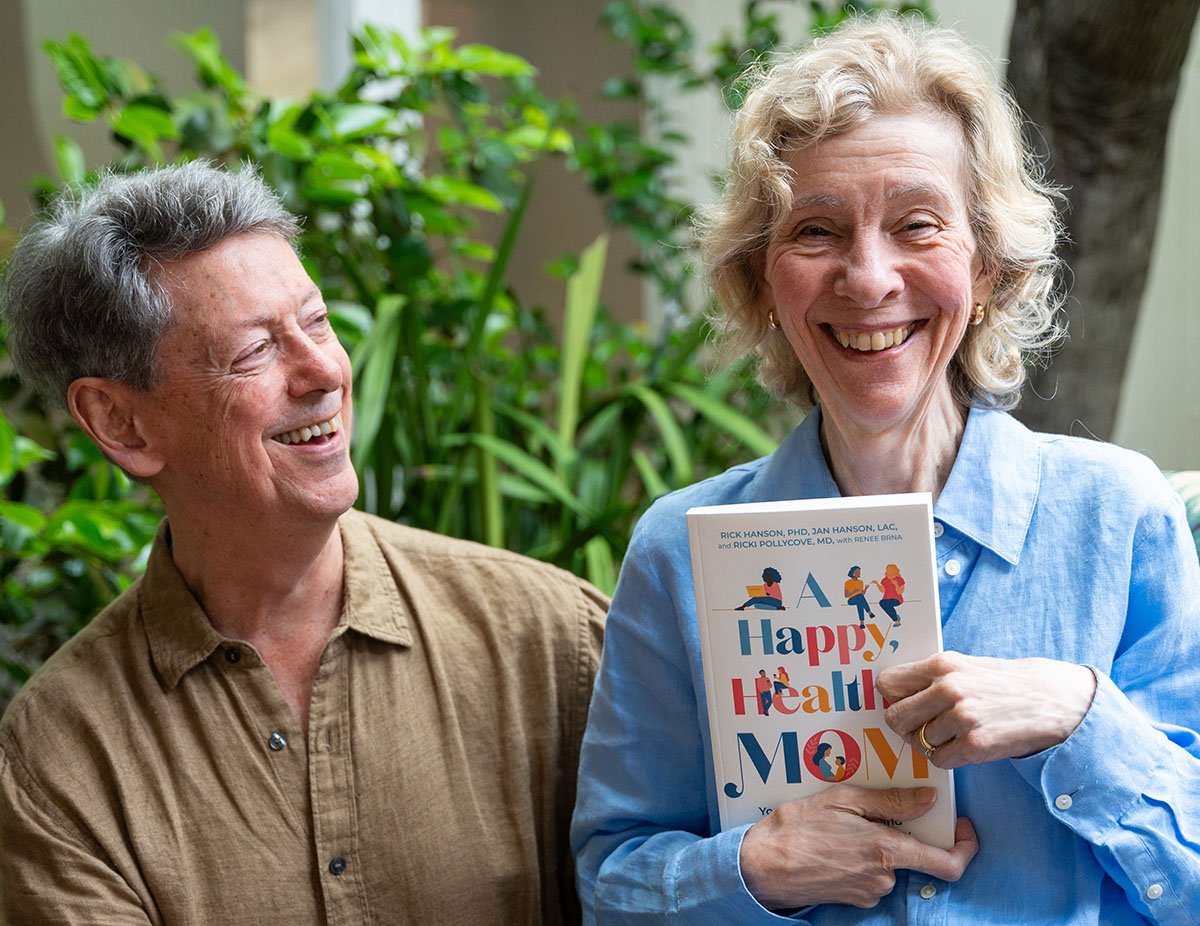
A Happy, Healthy Mom |
 |
|
We wrote this book for moms who feel exhausted, overwhelmed, or stretched too thin during the early years of raising a child. My wife Jan (a nutrition expert), friend Ricki Pollycove (a gynecologist-obstetrician), and I hope this will help moms reconnect to their own needs, restore their energy, reduce stress, and feel more supported — physically and emotionally. If you're a mom - or know one who could use some more support, I hope you'll check it out!
|
| Get Your Copy |
|
|
|
|
|
|
NEW ON THE PODCAST |
|
|
|
EPISODE 495:
Most relationships, romantic or otherwise, tend to get stuck in predictable patterns of conflict. This episode is about how to break relationship patterns and get things moving again. Dr. Rick and Forrest draw on Rick’s decades of work with couples and families to talk about getting on the same team, healthy boundaries, making clear requests, differentiation, and the pursuer-distancer dynamic. The episode closes with Forrest and his fiancée, associate therapist Elizabeth Ferreira, on fixing versus feeling, and how they worked through it in their own relationship.
|
|
> Listen Now |
|
|
|
|
JUST ONE THING (JOT) suggests a simple practice each week for more joy, more fulfilling relationships, and more peace of mind. A small thing repeated routinely adds up over time to produce big results.
Just one thing that could change your life.
(© Rick Hanson, 2026) |
|
|
|
|
|
|
|
|