Parent From the Same Page |
|
|
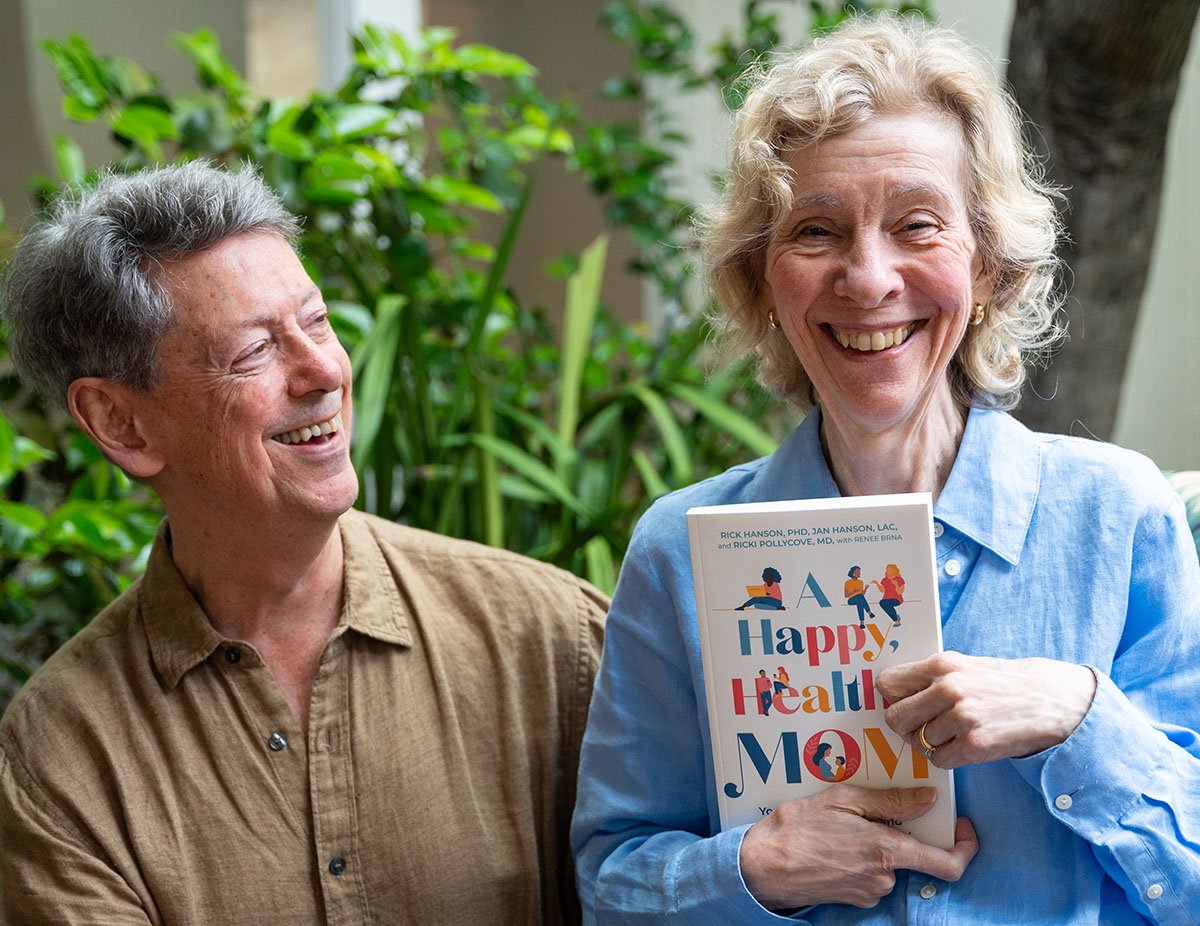
If this JOT resonates with you, you'll want to check out our upcoming book A Happy, Healthy Mom (which I wrote with my wife Jan Hanson as well as Ricki Pollycove and Renee Brna) - which comes out next week! If you preorder it there are some good bonuses, and you can check out our Instagram account if you'd like to add some tips and good vibes for moms to your feed. |
|
|
|
It's hard to get on the same page, since parents often have different values in child rearing, and issues of who gets to be right or in charge muddy the water. Yet children get confused when their parents have different approaches, and are more likely to play one parent against the other: But Dad said I could! And it is disheartening when a partner approaches one of the most important undertakings in life in a way that seems wrongheaded or cavalier.
Minor differences in parenting style are all right. Besides helping children prepare for a variety of teachers and (eventually) bosses, complementary approaches can build on each other, like Mom being more of a tender owie-kisser and Dad an exuberant horsie-back-ride-giver, so kids get the best of both worlds. But major differences in parenting values or actions are a problem. |
So, how do you do it? |
Take the First Steps
While it may seem unfair for one partner to make the first move, helping to evoke positive behavior can reduce their reasons for being irked. And there will be a better result by taking steps together. Here's a buffet of options, focused on the common situations of partners whose parenting styles differ.
- Have confidence in the other parent's fundamental parenting abilities
- Use encouragement
- Offer acknowledgment
- Create space for learning
- Try not intervening in situations and see what happens instead (unless something truly abusive is occurring)
- Understand the whole picture before jumping in
- Don't micromanage
- Get a reality check on the actual seriousness of the differences by being clear about the facts
- Be respectful. When offering suggestions, be respectful and specific
- Try to be a model of the reactions that are expected in return
Take Steps Together
- Talk about values
- Be supportive of each other
- Try not to polarize roles so that one parent is the disciplinarian while the other gets to be more nurturing or playful
- Use a tie-breaker
Establish Clear Facts
The place to begin is to establish what the facts are. Agreements may already be in place about how the load is shared, but commonly one partner feels that he or she is doing more than the other partner is aware of, which sparks recurring quarrels.
Each partner could simply list his or her part with the kids or household that day. If even that would be overwhelming, make a list for an hour or for a specific part of the day, such as the morning or evening.
At night, compare notes, and see if agreements can be made about the basic facts of that day without nit-picking whether something took five minutes or ten. At the end of the period, try to agree on what the facts are, plus or minus ten percent.
Establish Clear Principles
Even with clear facts, parents can disagree about what they mean. Cultural factors influence our expectations about the proper sharing of roles after children arrive.
In gentle ways, you can support your partner's involvement by shining light on what a difference it makes to your children.
Establish Clear Agreements
Once you come together on basic principles, agreements about actions are pretty straightforward, especially when you use the negotiation skills you've already learned. Here are some practical solutions that have helped many families, including those in which the parents are already sharing the load fairly and the real issue is only how to work together even better.
- Coordinate with each other
- Keep things in perspective
- Try to be flexible and creative for the greater good
- Look for ways to both be involved with the children
- Work out housework issues
- Tackle high-stress situations together
- Balance the total stress load more or less evenly
- Address the impact of work on your family
---
(Note: This JOT is adapted from A Happy Healthy Mom - a book written for mothers - focusing on typical parenting situations and gender differences that are experienced by many parents. Parenting is a complex subject, plus it intertwines with larger issues of gender roles and the long history of mistreatment of women; obviously society should do a better job of supporting families in general and mothers and fathers in particular, but meanwhile there are things they can do for themselves; alas, there is no room for these complexities in these brief JOTs; for my discussion of them, please the book.)
|
| Read This Online |
|
Share on Facebook | Forward this Email |
|
|
|
|
|
|
MORE GOOD STUFF |
|
|
New, LIVE Course:
Setting Healthy Boundaries
If you know you need better boundaries but struggle to set them - and not feel guilty about it - I hope you'll check out my upcoming, LIVE daylong workshop. In it, I'll teach you how to protect your time, energy, and emotional well-being... in a way that makes your relationships stronger and more sustainable. (And, if you register now you can get the early-bird, half-off discount.)
Check it out here.
|
|
|
How to Find Peace in the Present Moment
So much of the mind is leaning into the future—anticipating what will happen, planning what we’ll do, worrying about what could go wrong, and getting attached to how we or other people are supposed to become.
In this talk, I explore what Buddhist wisdom, neuroscience, and even the physics of time can teach us about stepping out of this constant striving and returning to the “front edge of now.”
Check it out here | Join the Wednesday Talks for Free
|
|
|
FROM SUBSTACK: Why Am I Always Trying to Please People?
In a recent live Q&A session of my Healing Insecure Attachment course, someone asked me a question that clearly struck a chord with others in the group. She finds herself always trying to please people, she said, even people she barely knows, and even people she’s hiring and paying. With a contractor working on her house, or the teacher at the front of her yoga class, the same low hum is there: a wish for them to be pleased with her, and a quiet discomfort at the thought that they might not be. By the end of some days, a good deal of her energy had gone into managing how other people felt about her, often without her quite deciding to.
Read more | Subscribe to My Substack
|
|
|
SCIENCE NEWS: Can Dogs Help Teens Cope with Peer Stress?
For a teen who feels anxious around peers, a warm, caring bond with a dog can be a small but real source of safety and steadiness - though it helps most when it supports, rather than replaces, connection with people.
(View the Science News Archive)
|
|
|
FOR PARENTS: 10 Ways to Support Your Partner
Out of our marriage and experience with many couples with children, here’s a Top Ten list (in no particular order) addressed to parents; hopefully some of these suggestions will fit your relationship.
|
|
|
Positive Neuroplasticity Training
PositiveNeuroplasticity.com provides resources and real-life accounts for using positive brain change in your everyday life. Classes and one-on-one counselling are also available to deepen your learning.
|
|
|
|
|
|
|
NEW BOOK AVAILABLE FOR PREORDER |
A Happy, Healthy Mom |
 |
|
We wrote this book for moms who feel exhausted, overwhelmed, or stretched too thin during the early years of raising a child. My wife Jan (a nutrition expert), friend Ricki Pollycove (a gynecologist-obstetrician), and I hope this will help moms reconnect to their own needs, restore their energy, reduce stress, and feel more supported — physically and emotionally. If you're a mom - or know one who could use some more support, I hope you'll check it out!
|
| Preorder Your Copy |
|
|
|
|
|
|
NEW ON THE PODCAST |
|
|
|
EPISODE 486:
Dr. Rick and Forrest explore how to become more resistant to manipulation, discussing terms like gaslighting, DARVO, and love bombing. |
|
> Listen Now |
|
|
|
|
JUST ONE THING (JOT) suggests a simple practice each week for more joy, more fulfilling relationships, and more peace of mind. A small thing repeated routinely adds up over time to produce big results.
Just one thing that could change your life.
(© Rick Hanson, 2026) |
|
|
|
|
|
|
|
|