|
This week’s practice is about finding the softer, deeper, younger longing beneath what others want, but sometimes the person who most needs that is you. In my new 6-week live course, The Healing Link (which starts this Friday), I’ll show you how to give the younger layers inside you what they needed and never got, so that old pain finally eases for good. (Sign up and use coupon JOT10 to save an additional 10%.) |
|
|
|
|
|
|
Research shows that relationships are built from interactions, and interactions are built from moments. A critical moment in an interaction is when one person wants something from the other one. ("Wants" include wishes, needs, desires, hopes, and longings.) The want could be simple and concrete, like "Please pass the salt." Or it could be complex and intangible, such as "Please love me as a romantic partner."
Wants can be communicated in many ways. Gaze, touch, tone, facial expression, posture, and action speak volumes. Whether verbally or nonverbally, some people express their wants clearly, but many do not. The more important a want is, the more likely it will leak out slowly, or be expressed with a lot of distracting add-ons and emotional topspin.
Now what?!
Think of a significant relationship. How clearly have you expressed your own wants in it? How do you feel when the other person makes a sincere effort to give you what you want?
When I reflect on these questions myself, it makes me realize that it's not so easy to communicate clearly and that I should give others more slack.
Second, it makes me realize that I should generally try to give others what they want if it's reasonable and possible. Out of self-interest, doing this is the best odds way to get off their radar, build goodwill, and take the moral high ground. Out of benevolence, doing this is kind and caring. Everyone is scared and hurting, not just me.
Of course, I do not mean giving people things that would harm them, you, or others. Nor do I mean giving up asking for what you want. And if they're rude, demanding, threatening, snippy, high-handed, or harsh, then their want could be a nonstarter until they change their tone.
In essence, this practice is about inner freedom. You are free to decide what is reasonable in what the other person wants and what you are going to do about that. You are free to disentangle yourself from your emotional reactions to their wants. And free to live by your own code, honoring your own values and perceptions of reality, no matter what others do. |
So, how do you do it? |
|
Find out what they really want. Sort through the surface clutter to the real priority for the other person. What could be the softer, deeper, younger longing? Perhaps ask questions like: What is important to you here? What would it look like if you got what you wanted?
Most people want pretty straightforward things: Put the cap back on the toothpaste. Don't interrupt so much. Ask me questions each day about myself, and pay attention to the answers. Be nice to me. Keep being my lover even while we raise children. Pull your weight with housework. Stick up for me with others. Be interested in how I feel. Most of the time, it's really not that hard to give someone what they want. It's more a matter of whether you want to.
Once you have a pretty clear idea about what the person wants, decide for yourself what, if anything, you are going to do. Remember that your wants matter, too, and that you can't give without also filling yourself up. And remember that giving others what they want is usually a good way to take of yourself.
Personally, it was a great breakthrough to realize that giving others what they wanted was not knuckling under to them. Rather, it was a kind of triple-bonus aikido move that tapped into my caring for people while pulling me out of conflicts and putting me in the best position to ask for what I wanted myself. I redefined situations in which people criticized me into a kind of game in which I unilaterally eliminated the reasonable basis for their complaints, and began to enjoy what's traditionally called "the bliss of blamelessness."
Pick something reasonable and just give it to the other person for an hour or a week without saying a word about it, and see what happens. Pick something else and see what happens. When it feels right, talk about what you're doing. When you like, also talk about your own wants.
This practice may seem like a high bar. But actually, when you make the shift, it's like walking downhill with the wind at your back. You are still taking care of your own needs and not letting people push you around. Instead of getting caught in sticky quarrels, you're delivering the goods as best you can and moving on.
Know what it's like to be with someone who takes care of herself while also giving you what you want as best she can? That's what it's like to be with you when you do the same yourself. Very sweet! |
| Read This Online |
|
Share on Facebook | Forward this Email |
|
|
|
|
|
|
MORE GOOD STUFF |
|
|
How to Heal the Emotional Baggage You’ve Been Carrying
We all carry emotional baggage from the past. These old hurts, fears, insecurities, and patterns can continue to affect us long after the original experiences have passed. While mindfulness can help us relate differently to these painful experiences, what does it take to actually heal them?
In this talk, I explored how to release the burdens of the past, identify the inner strengths and positive experiences that are best matched to our particular struggles, and how we can use these resources to gradually change the brain, heal old wounds, and move forward with greater freedom and peace.
Check it out here | Join the Wednesday Talks for Free |
|
|
FROM SUBSTACK:
Why Do We Feel So Suspicious of People Who Aren't Like Us?
Our human ancestors lived and evolved together in small hunter-gatherer bands for about 300,000 years, and their toolmaking hominid ancestors lived in similar small bands for another two million years or so before that. Individuals and bands that were better at cooperating, better at compassion and empathy, teamwork and cooperation, were more able to survive and pass on their genes. As a result, today we have remarkable social inclinations woven into our DNA, hardwired into the human brain. But that’s only part of the story.
Read more | Subscribe to My Substack
|
|
|
SCIENCE NEWS: A Familiar Forecast on a Faraway World
Scientists using the Webb telescope have watched water clouds grow thicker and thinner on a distant, chilly world—a cool reminder that even far beyond our solar system, there are skies with something familiar about them.
(View the Science News Archive)
|
|
|
FOR PARENTS: Skillful Responses to Child Wants
The time that we learn the most about wanting is in childhood. Parents profoundly influence the skills their children develop with getting what they want, the experiences and expectations they have around wanting, and the fundamental values and aims their children acquire. Therefore, skillfully responding to child wants are the foundation of a lifetime of success and satisfaction with our wishes, hopes, and dreams.
|
|
|
Positive Neuroplasticity Training
PositiveNeuroplasticity.com provides resources and real-life accounts for using positive brain change in your everyday life. Classes and one-on-one counselling are also available to deepen your learning.
|
|
|
|
|
|
|
NOW AVAILABLE TO PURCHASE! |
A Happy, Healthy Mom |
 |
|
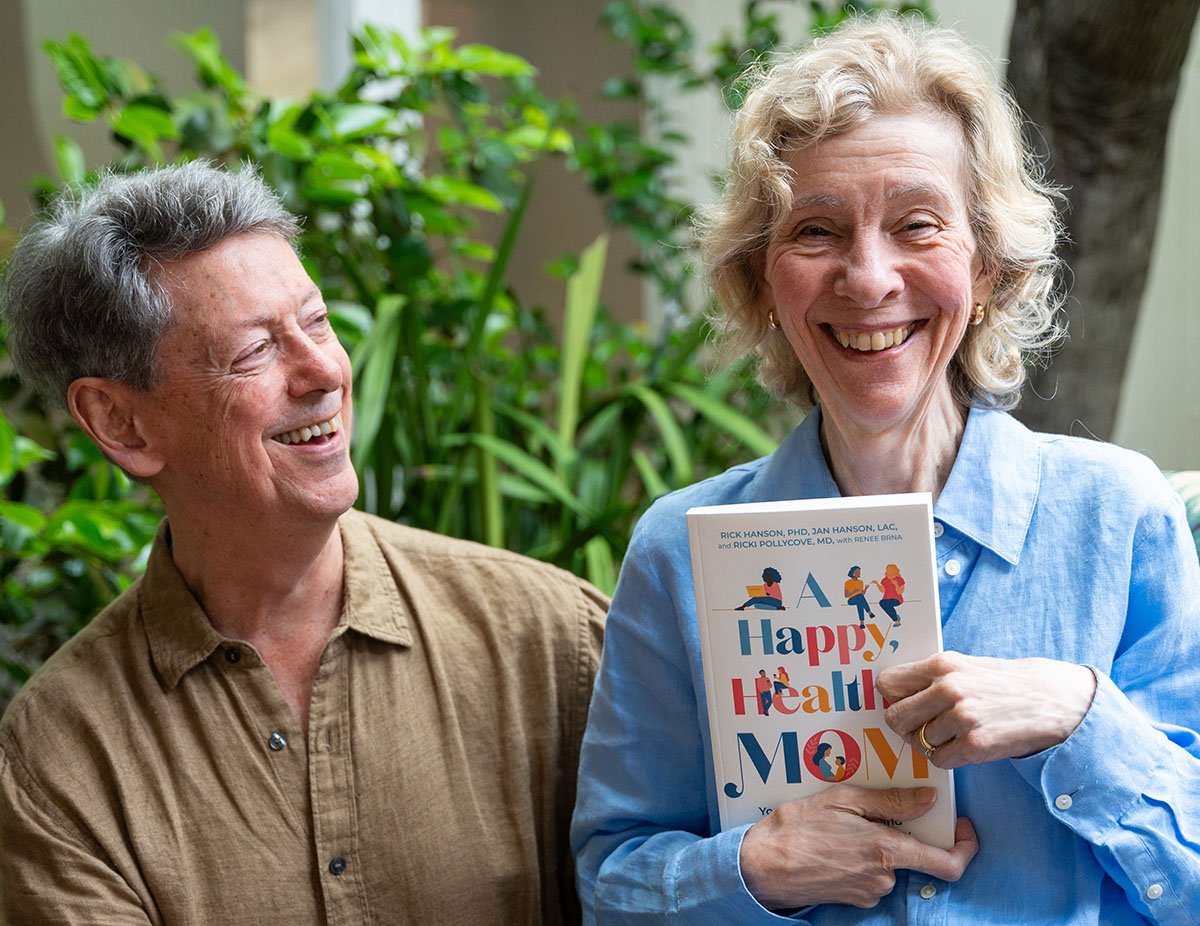
We wrote this book for moms who feel exhausted, overwhelmed, or stretched too thin during the early years of raising a child. My wife Jan (a nutrition expert), friend Ricki Pollycove (a gynecologist-obstetrician), and I hope this will help moms reconnect to their own needs, restore their energy, reduce stress, and feel more supported — physically and emotionally. If you're a mom - or know one who could use some more support, I hope you'll check it out!
|
| Get Your Copy |
|
|
|
|
|
|
NEW ON THE PODCAST |
|
|
|
EPISODE 493:
In this second episode on self-acceptance, Forrest and Dr. Rick focus on how to accept the parts of ourselves we don’t like. They explain why “just love yourself more” rarely works, walk through a four-step process, and talk about why acceptance gets easier when you can set boundaries with yourself. They also cover accepting the “bad” parts of who we are, how to work with the persona you’ve built to get through life, and self-authorship: taking a hand in who you’re becoming. |
|
> Listen Now |
|
|
|
|
JUST ONE THING (JOT) suggests a simple practice each week for more joy, more fulfilling relationships, and more peace of mind. A small thing repeated routinely adds up over time to produce big results.
Just one thing that could change your life.
(© Rick Hanson, 2026) |
|
|
|
|
|
|
|
|