|
If you're still carrying around old baggage and ready to set it down for good, I hope you'll join me for The Healing Link which starts October 16th. You'll join me live on Zoom every week for 6 weeks and we'll focus on filling up the empty places inside so you can feel more secure, worthy, and joyful. (Sign up this week to save 40%!) |
|
|
|
|
|
|
I admit it: whether close to home or far away, I wish some people were different. Depending on who they are, I wish they'd stop doing things like leaving cabinet doors open in our kitchen, sending me spam emails, or turning a blind eye to global warming. And I wish they'd start doing things like being friendlier toward me or spending more money on public education. Even if it doesn't affect me directly, for their own sake, I do wish that various people I care about were more energetic, less anxious, or less self-critical.
In what ways do you wish that people were different? Think about the people close to you - friends, family, mates - as well as co-workers, drivers on the highway, business people, media types, politicians, and world leaders. Think about people who are not doing their share of housework, not getting you the healthcare you need, promoting political policies that you dislike if not despise, etc., etc.
It's normal to wish that others were different, just like it's normal to wish that you, yourself, were different (e.g., thinner, richer, wiser). It's fine to try to influence others in skillful, ethical ways.
But problems come when we tip into righteousness, resistance, anger, fault-finding, badgering, or any other kind of struggle.
"Opening out” – my current focus – means relaxing into a growing sense of connection, even oneness, with all things. This is hard to do when we’re struggling with other people!
Instead, we could accept them for who they are and for who they are not.
Accepting people does not itself mean agreeing with them, approving of them, waiving your own rights, or downplaying their impact upon you. You can still take appropriate actions to protect or support yourself or others. Or you can simply let people be. Either way, you accept the reality of the other person. You may not like it, you may not prefer it, you may feel sad or angry about it, but at a deeper level, you are at peace with it. That alone is a blessing. And sometimes, your shift to acceptance can help things get better. |
So, how do you do it? |
|
Pick someone who is important to you. (You can do this practice with multiple people.) In your mind, out loud, or in writing, say things like these and see how you feel: “I accept you completely. Countless causes, large and small, have led you to think, speak, and act the way you do. You are who you are. I let it be. You are a fact and I accept the facts in my life. You and I are part of a larger whole that is what it is, and I accept it, too.”
If you like, be more specific, naming aspects of this person that particularly bother you, such as: “I accept that you . . . snore . . . leave your clothes on the floor . . . are still angry with me . . . are fighting me tooth-and-nail in this divorce . . . don’t really understand me . . . are not a good teacher for my child . . . break the law . . . hurt people on a large scale . . . “ (And remember that you can still disagree with, make requests of, or stand up to other people – while accepting them fully.)
See if you can tolerate what comes up for you when you soften into acceptance. Often we avoid accepting other people as a way to avoid the feelings we’d have if we opened wide to everything they are and everything they’re not.
Consider how you have gotten tangled up with this other person, struggling to change them. When I do this myself, I become aware of my own rightness, positionality, judgments, pushiness, irritability, narrow views, hurts, longings, grievances, or remorse. See if you can let go of some, even all, of these entanglements. Open to the easing, relief, and peace that can come when you do.
Also, consider how much you like it when you feel that another person accepts you completely. It’s a beautiful gift – and we can give it ourselves to others when we accept them. Imagine how it might improve your relationship with someone if that person felt you accepted him or her fully. Acceptance is a gift that gives back. |
| Read This Online |
|
Share on Facebook | Forward this Email |
|
|
|
|
|
|
MORE GOOD STUFF |
|
|
FROM SUBSTACK: Can Praise Be Just as Risky as Criticism?
Most of what gets said about not taking things personally is about protection, not letting other people’s bad behavior get under your skin. But someone in the group, Bill, asked a sharper question: what about the good stuff?
He put it this way: what about praise and respect coming to you, including opportunities for really rewarding engagement in projects that promise positive satisfaction? These experiences caress one’s self-identity very seductively. So shouldn’t we equally not take positive praise and regard from others personally?
Read more | Subscribe to My Substack
|
|
|
BOOK:
The Impossible Will Take a Little While
Looking for hope? When each day can bring new reasons for outrage or despair, bestselling organizer and social change analyst Paul Loeb offers a powerful antidote—stories of courage and inspiration about how people changed history despite daunting odds. Loeb’s book The Impossible Will Take a Little While gives us the strength to keep on.
CHECK IT OUT HERE |
|
|
FOR PARENTS: What To Do So Your Kids Don’t Stress You Out
The daily swirl of tantrums, squabbles, and other challenges can leave parents of young children feeling stressed. A simple plan can help you nurture your kids, set clear limits, and care for your own well-being.
Here are a few suggestions.
|
|
|
|
|
|
|
NOW AVAILABLE TO PURCHASE! |
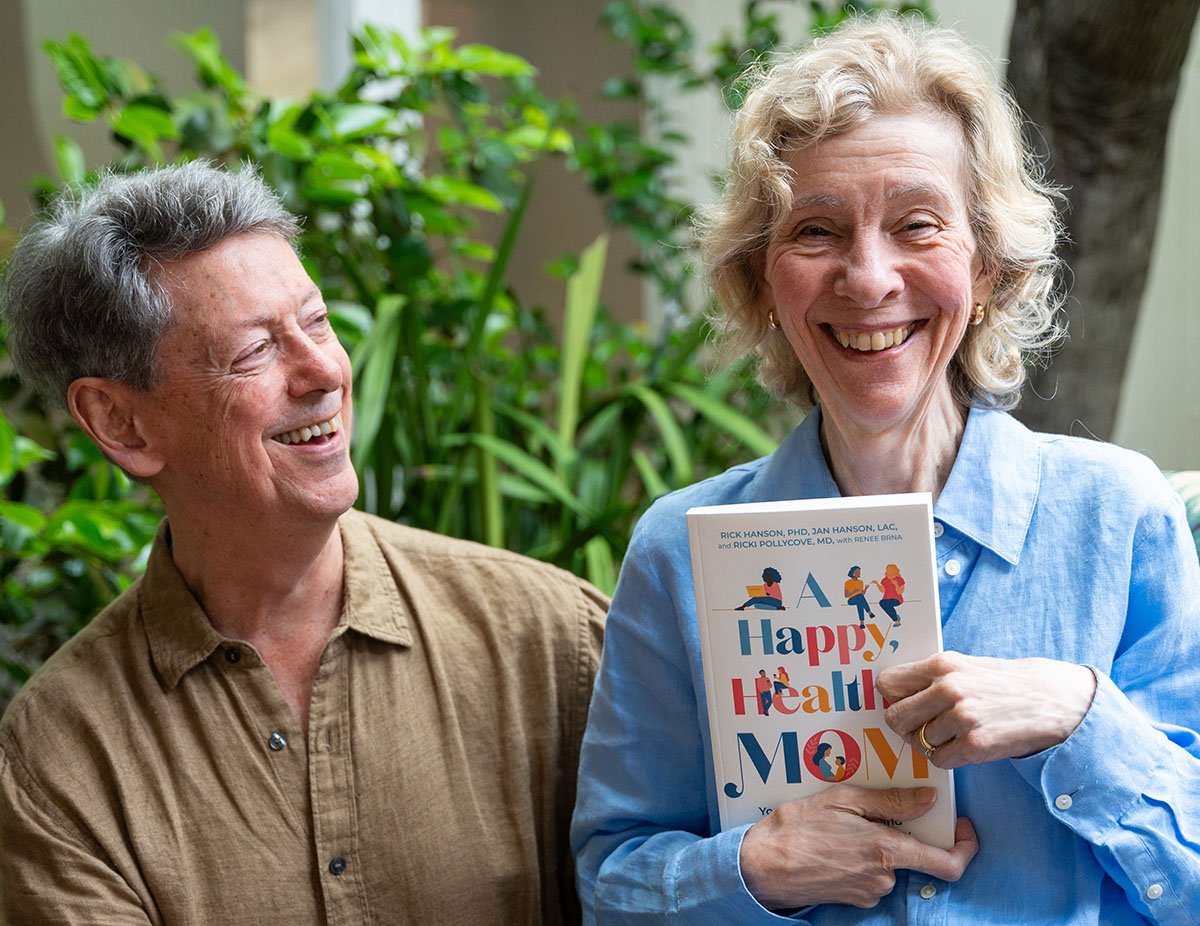
A Happy, Healthy Mom |
 |
|
We wrote this book for moms who feel exhausted, overwhelmed, or stretched too thin during the early years of raising a child. My wife Jan (a nutrition expert), friend Ricki Pollycove (a gynecologist-obstetrician), and I hope this will help moms reconnect to their own needs, restore their energy, reduce stress, and feel more supported — physically and emotionally. If you're a mom - or know one who could use some more support, I hope you'll check it out!
|
| Get Your Copy |
|
|
|
|
|
|
NEW ON THE PODCAST |
|
|
|
EPISODE 492:
Self-acceptance gets recommended constantly, but are we really supposed to accept the parts of ourselves we don’t like? Won’t that stop us from changing? Dr. Rick and Forrest discuss what self-acceptance is, what it isn’t, and why it’s the starting point for real change. They share the four stages of competence (and why conscious incompetence is where learning stalls), the two escape hatches people take from it, why harsh self-criticism is a form of avoidance, and Rick’s three circles model of the act, the scared self, and the being. |
|
> Listen Now |
|
|
|
|
JUST ONE THING (JOT) suggests a simple practice each week for more joy, more fulfilling relationships, and more peace of mind. A small thing repeated routinely adds up over time to produce big results.
Just one thing that could change your life.
(© Rick Hanson, 2026) |
|
|
|
|
|
|
|
|