|
Just One Thing |
|
|
|
Simple Practices for Resilience and Happiness from |
|
DR. RICK HANSON |
 |
|
|
|
When is it "time to fold 'em? |
THE PRACTICE: |
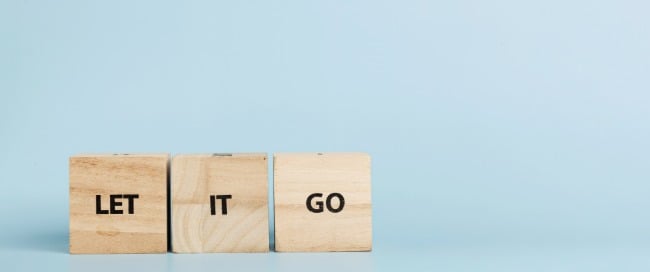
Let It Go. |
|
|
— Why? — |
|
Most people, me included, are holding onto at least one thing way past its expiration date.
It could be a belief, perhaps that your hair is falling out and you are ugly and unlovable as a result, that you can't say what you really feel in an intimate relationship, or that you must lose ten pounds to be attractive. It could be a desire, such as wishing someone would treat you better, pushing to make a project be successful, yearning for a certain kind of partner, or wanting to cure an illness. It could be a feeling, like a fear, grudge, resentment, longtime grief, or a sense of low worth. It could be a behavior, such as jogging with aging knees, playing video games, or buying clothes. It could be something you insist others do, such as make their beds, drive a certain way when you're in the car, or meet particular goals at work.
Some of the things we're attached to are obviously problematic – and usually, we know it, or could know it with a little reflection – such as self-critical thoughts, obsessions or compulsions, defensiveness about your issues, or drinking too much. These things are relatively straightforward to deal with, even though they could be difficult.
The hard things are the ones that make sense, that have good things about them, that would be good for you and likely others if they could work out – like longing for love from someone, or wishing more people would come to your store, or hoping that you're free of cancer – but, alas, are either not worth the price or it's sadly clear that you just can't make them happen.
You've watered the tree, fertilized it, protected it, even danced around it at midnight under a full moon . . . and it's still not bearing any fruit.
Now, what do you do? |
— How? — |
|
Sometimes you just have to let it go.
For starters, take a clear look at yourself. For example, I'm a churner, a plugger. It's tough for me to accept that my efforts are not producing the results I want. But to keep trying to grow corn in the Sahara – pick your own metaphor – when there's little or no pay-off either present or insight means that you are stressing yourself and probably others for little gain, plus wasting time, attention, and other resources that could be better invested elsewhere.
Step back from your situation, from whatever it is that you're attached to, and try to hold it in a larger perspective. Get some distance from it, as if you're sitting comfortably on a sunny mountain looking down on a valley that contains this thing you've been holding onto. Exhale and relax and listen to your heart: What's it telling you about this attachment? Are the conditions truly present to have it come true? Is it worth its costs? Is it simply out of your hands, so that your own striving – however well-intended, skillful, and honorable – just can't make it so? You get to decide whether it's best to keep trying, or time to let it go. Be with these reflections – perhaps sitting quietly with a cup of tea, or in someplace that is beautiful or sacred to you – and let their answers sink in.
You can help yourself let something go by making it concrete. For example, put a small stone or other objects in your hands and imagine that it is the thing you've been attached to. Hold onto it hard; let your desires and thoughts about it flow through awareness; feel the costs related to it; and when you're ready, open your hand and drop it – and open as well to any sense of relief, freedom, ease, or insight. You could do a similar practice by writing a note about this attachment, and then tearing it up and letting its pieces fall away. Or you could talk with a trusted being – perhaps a friend or therapist, or in your own kind of prayer – and explore the attachment, communicate your intentions to move on, and let it go.
You might still have the wish that something works out, but you no longer feel driven, compelled, intense, fixed, caught up, identified, or strongly desirous about it. You have accepted the way it is. You have surrendered; in a healthy sense, you have given up. Make space for the disappointment or grieving that's natural when you let go of something that's been important for you. It's normal to feel sad about a loss. Then after a while, it occupies your mind less and less, and you move on to more fruitful things.
Let good things come into the space that's been opened up by whatever you have let go of. These could be more time, freedom, energy, peace, creativity, or love. Of course, there are many things worth pursuing, including the next breath, but you can make wholesome efforts while simultaneously letting go of attachment to their results.
Let yourself be surprised – both by what might replace what you've released and by the power of letting go in general. As the great Thai Buddhist teacher, Ajahn Chah once said: |
|
If you let go a little, you will have a little happiness.
If you let go a lot, you will have a lot of happiness.
If you let go completely, you will be completely happy. |
| Read this Online |
|
Know someone who could let something go? |
|
|
|
Share this Just One Thing practice with them! |
|
Share on Facebook | Tweet on X | Forward this Email |
|
|
|
|
|
|
FREE LIVE WEBINAR |
 |
|
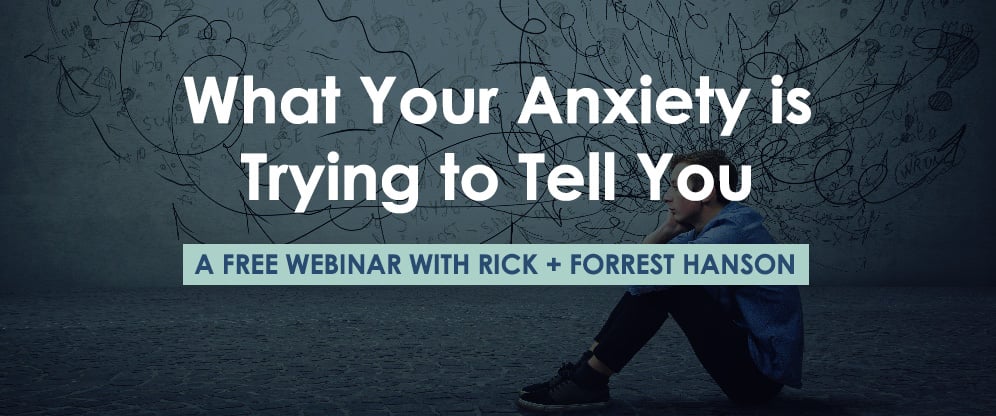
While anxiety can feel like a burden, it often points to unmet needs or old patterns. Join me and Forrest on December 16th for a FREE, live webinar where we'll explore some of the signals your anxiety might be trying to send you. |
| Sign Up FREE |
|
|
|
|
|
|
NEW ON THE BEING WELL PODCAST |
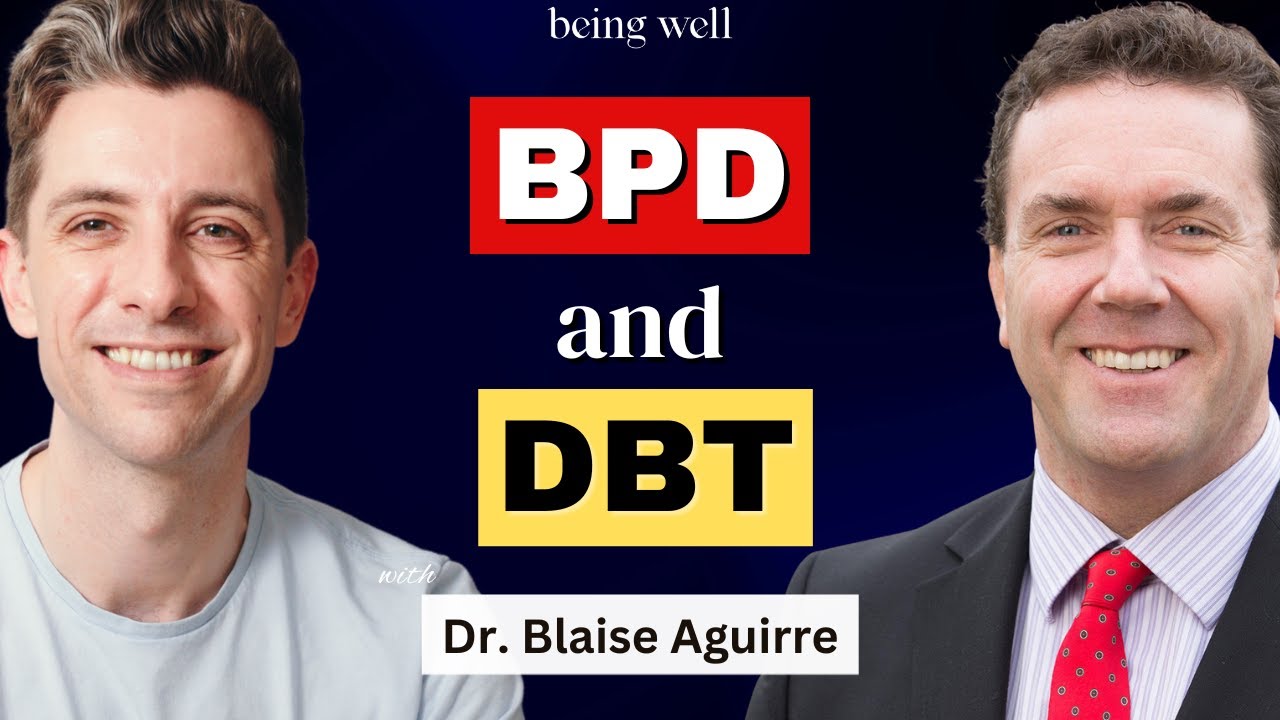
Understanding Borderline Personality Disorder with Dr. Blaise Aguirre |
 |
|
Forrest is joined by psychiatrist Dr. Blaise Aguirre to discuss Borderline Personality Disorder (BPD) and Dialectical Behavioral Therapy (DBT). They explore how extreme emotional sensitivity can lead to despair, self-hatred, suicidality, and an intense fear of abandonment, and how DBT can teach the skills needed to regulate those feelings. They discuss the nature of self-hatred, how to change the stories you've told about yourself, and how their insight and empathy can make people with BPD some of his favorite clients to work with. |
| Check out the Episode |
|
|
|
|
|
|
NEW FROM THE WEDNESDAY MEDITATIONS + TALKS |
 |
|
Last week, I offered a live meditation on Feeling Already Supported, followed by a talk called Science Says You Need Social Support and a bonus session on When Meditation Gets Hard. I hope you'll take a moment to check them out.
If you haven't yet, sign up to join me every week for this free, live offering.
|
| Check It Out |
|
|
|
|
|
|
MORE GOOD STUFF |
|
|
|
SCIENCE NEWS (VIEW ARCHIVE HERE)
Even with lots of training wheels on, these macaque "dancers" suggest that the brain's capacity to feel and follow a beat runs deep in our evolutionary wiring, hinting that rhythm and music grow from ancient circuits for pattern, prediction, and reward that humans later turned into song and dance.
|
|
|
|
FOR PARENTS
As you brave the holiday shopping crowds — trying to decide whether to give Barbie or Bluey, Legos or (good grief) an iPad — or hassle with returns and sales in January, it's easy to feel a little overwhelmed, and distracted from the real gifts that are at the heart of parenting.
|
|
|
|
|
|
|
HAVE YOU READ IT YET? |
 |
|
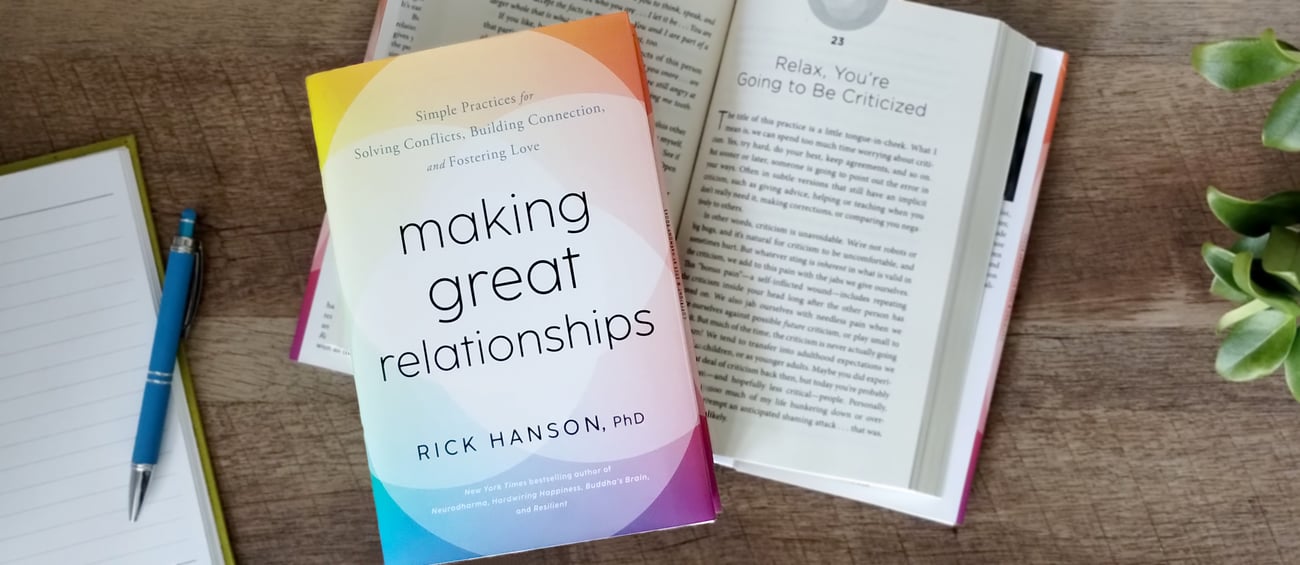
Learn 50 simple practices for solving conflicts, building connection, and fostering love. Available in Hardcover, Paperback eBook, and Audiobook, wherever books are sold.
|
| Get Your Copy |
|
|
|
|
|
|
WORDS OF WISDOM |
"Let good things come into the space that's been opened up by whatever you have let go of." |
|
— RICK HANSON, PHD |
|
|
|
|
JUST ONE THING (JOT) is the free newsletter that suggests a simple practice each week for more joy, more fulfilling relationships, and more peace of mind. A small thing repeated routinely adds up over time to produce big results.
Just one thing that could change your life.
(© Rick Hanson, 2024) |
|
|
|
|
|
|
|
|