Turn Anger into a Peaceful Heart
|
|
|
If you know you need better boundaries but struggle to set them - and not feel guilty about it - I hope you'll check out my upcoming, LIVE daylong workshop. In it, I'll teach you how to protect your time, energy, and emotional well-being... in a way that makes your relationships stronger and more sustainable. (And, if you register now you can get the early-bird, half-off discount.) |
|
|
|
Let’s be realistic: it’s completely normal for a mother to get angry with her children. Or with her partner, the in-laws, her clueless boss—or herself. Studies have found that the more children a woman has, the more time she spends with them or doing housework, or the more hassles she has with child care or her kids, the angrier she’s likely to be. There’s no need to feel guilty about anger itself. The real question is, what can you do about it?
On the one hand, anger is a healthy emotion. It shines a bright light on things that should be different—like a child’s incessant whining, a partner’s broken agreements, or some stupid workplace policy that keeps you from your kids—and energizes you to try to change them. Bottling up anger numbs your other feelings as well, and it wears on your health. Acting like you are not mad when you really are is inauthentic and teaches kids to put on a false face themselves—not a good lesson.
On the other hand, anger can be an emotional roller coaster that stresses the body and can create bad feelings for hours. And no other emotion has such an impact on relationships. When Mom or Dad gets mad, that’s scary and often overwhelming for kids since their parents are so big, powerful, and important. In an intimate relationship, frequent anger is very wounding; after a while, anyone would start wanting to step back from a person who’s angry a lot of the time.
Fortunately, there’s a healthy middle path between tight-lipped self-censoring and boiling-over rage. |
So, how do you do it? |
Stop Things from Building Up
We usually get mad in two stages. First, there's the priming: tension, frustration, bodily discomfort, fatigue, gripes, etc., which mount up like a growing pile of dynamite. Then comes the firecracker that sets it all off.
During the priming phase, try to defuse things before there's a blowup. Here are a few ideas.
- Don't overgive. One trick is to imagine asking your future self how you will feel if you commit to taking on yet another task. Another is to adopt the blanket policy of never agreeing to anything until there's been adequate time to think it over.
- Blow off steam along the way. Try not to accumulate a residue of irritation from individual interactions.
- Take a break before reaching the breaking point. Most people become quite frayed by the time they've been alone with a young child for three or four hours. Make it a serious priority to find some way, any way, to take a break before the pot boils over.
Understand What's Making You Angry
When anger arises, there's typically more to the story. Let's say it's Wednesday after work, a mother is in the store with her three-year-old son, and all she wants to do is get home, make some dinner, and relax. But he wants some candy, she says "no," and he throws a major tantrum. People are staring, she feels mortified, somehow she gets him out of the store and into her car, and then she really yells at him. In that moment, the intensity of her anger is at least a six or seven on a ten-point scale.
But now, let's change some of the elements of the situation. Suppose it's a Saturday morning instead, and she's feeling rested and relaxed. How intense do you think her anger would be in that case? Probably less: maybe one to three on the anger scale. Or suppose that she's at home, not out at the store, when her son throws his tantrum; no one is watching, and she doesn't have to care what anyone is thinking. How angry do you think she'd be then? Again, probably less.
Fatigue and embarrassment can amplify feelings by five or so points while having nothing to do with the actual seriousness of a child's misbehavior. But when the "amplifiers" in life are understood, suddenly there's a lot less to be mad about.
Key Ways to Turn Anger into Peace
- Don't let things build up, don't overgive, blow off steam as you go along, etc.
- Understand the thoughts or ways you are perceiving things that are the true sources of your anger.
- Try to sense down to the softer emotions beneath anger, like hurt or fear; acknowledge those to yourself or express them to others.
- If you feel like you're going to blow up, walk away or call a friend.
- Get professional help if you are directing anger at yourself or others in harmful ways.
- Ask your heart for guidance.
---
(Note: This JOT is adapted from Mother Nurture, a book written for mothers - focusing on typical parenting situations and gender differences that are experienced by many, though not all, mothers and fathers, and by parents in same sex relationships. Parenting is a complex subject, plus it intertwines with larger issues of gender roles and the long history of mistreatment of women; obviously society should do a better job of supporting families in general and mothers and fathers in particular, but meanwhile there are things they can do for themselves; alas, there is no room for these complexities in these brief JOTs; for my discussion of them, please see Mother Nurture.)
|
| Read This Online |
|
Share on Facebook | Forward this Email |
|
|
|
|
|
|
MORE GOOD STUFF |
|
|
Insight – The Power of Seeing Reality Clearly
Last week, I was joined by Melvin McLeod, editor-in-chief of Lion’s Roar and author of The Complete Path of Mindfulness, to explore what mindfulness can become when we see it as much more than a meditation technique.
Check it out here | Join the Wednesday Talks for Free
|
|
|
FROM SUBSTACK: How Do I Feel Closer to the People in My Life?
Many of us have watched our circle grow thinner over the past few years. The regular lunches, the casual drop-ins, the standing walk with a friend: a lot of that quietly fell away, and for some of us it hasn’t fully come back. You can find yourself wanting to feel closer to the people in your life, to friends, to family, sometimes even to a partner you see every day, without being sure how to get there.
Read more | Subscribe to My Substack
|
|
|
SCIENCE NEWS: Human Brain Cells Are Far More Powerful Than Scientists Thought
Recent research is showing that each human neuron is not merely a tiny on-off switch, but a remarkably intricate processor—one small expression of the extraordinary capacities for learning, imagination, and wise action already built into the brain.
(View the Science News Archive)
|
|
|
FOR PARENTS: Getting More Help From Your Partner
Some couples are equal partners in the work of making a family. But that’s the exception, since many studies have found that the average mother is on-task, working away at one thing or another, about twenty hours a week MORE than her partner is, whether or not she is drawing a paycheck. And if she has no partner, in most cases just about all of the work of raising children falls to her alone. If you are one of the many parents who would like more help from your partner, we suggest you do two things.
|
|
|
|
|
|
|
NOW AVAILABLE TO PURCHASE! |
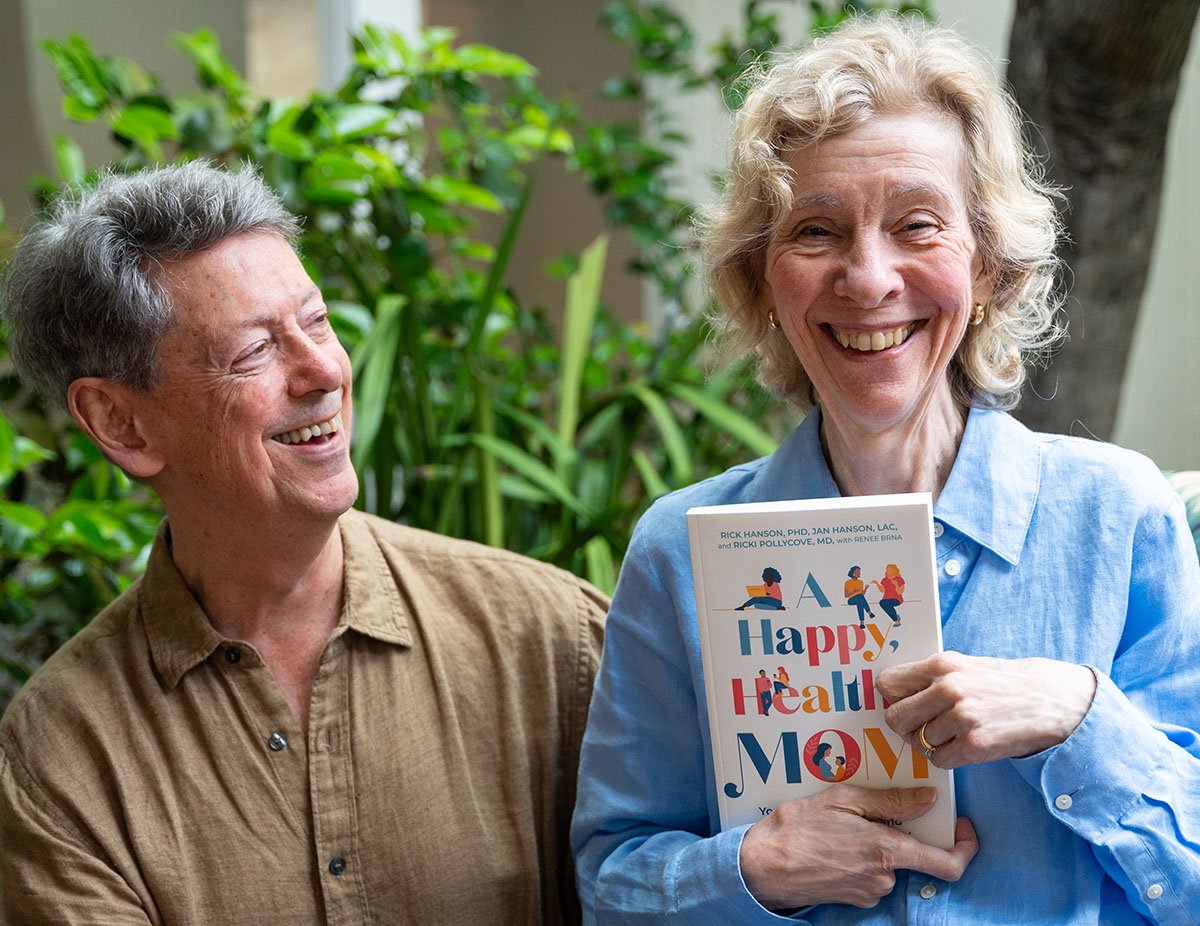
A Happy, Healthy Mom |
 |
|
We wrote this book for moms who feel exhausted, overwhelmed, or stretched too thin during the early years of raising a child. My wife Jan (a nutrition expert), friend Ricki Pollycove (a gynecologist-obstetrician), and I hope this will help moms reconnect to their own needs, restore their energy, reduce stress, and feel more supported — physically and emotionally. If you're a mom - or know one who could use some more support, I hope you'll check it out!
|
| Get Your Copy |
|
|
|
|
|
|
NEW ON THE PODCAST |
|
|
|
EPISODE 487:
We’ve all been told to “feel our feelings,” but what does that actually mean, and how do you do it? Forrest talks with trauma therapist Simone Saunders about how to go from knowing your patterns to being able to do something about them when things get intense. |
|
> Listen Now |
|
|
|
|
JUST ONE THING (JOT) suggests a simple practice each week for more joy, more fulfilling relationships, and more peace of mind. A small thing repeated routinely adds up over time to produce big results.
Just one thing that could change your life.
(© Rick Hanson, 2026) |
|
|
|
|
|
|
|
|