 |
Just One Thing |
|
|
|
Simple Practices for Resilience and Happiness from |
|
DR. RICK HANSON |
 |
|
|
|
|
If there's a change in your life you've been wanting to make, but have struggled getting started or sticking with it, I hope you'll check out my Sticking to Your Goals course. Over 5 days I'll help you get in touch with what you really want, tap into your inner strengths, and create a plan that truly supports your growth. |
 |
|
|
|
What’s the spark and what’s the fuel? |
THE PRACTICE: |
Welcome Joy. |
|
|
— Why? — |
|
Positive emotions – such as feelings of gratitude, love, and confidence – strengthen the immune system, protect the heart against loss and trauma, build relationships, increase resilience, and promote success. Based on studies that have already been done, if a drug company could patent a happiness pill, we’d be seeing ads for it every night on TV.
Technically, emotions can be organized along two dimensions: intensity (how strong they are) and hedonic valence (how good they feel). Tranquility, for example, has low intensity but can feel really, really good, a profound inner peace.
Low-intensity positive emotions are great. They’re the bread and butter of everyday well-being. This said, high-intensity positive emotions have special benefits. They actually help lengthen the lifespan. They steady the mind and improve concentration by engaging steady and high levels of the neurotransmitter, dopamine, that stabilize the contents of working memory and block out distractions – perhaps a reason why “bliss” is recommended in Buddhist meditation training as a factor of non-ordinary states of consciousness and awakening altogether. And they can pull us out of the numbing, blahs, and meh-ness of ordinary routines, stresses, disappointments, and frustrations – sort of like that transition in the Wizard of Oz movie from black and white to color.
Intense positive emotions include delight, passion, rapture, thrill, triumph, head over heels in love, exuberance, elation, and rejoicing. In a word, joy.
Finding and protecting joy is worth doing at any time. And it’s especially important when you’re facing challenges at any scale, from worries about your child to alarm about your world (about the latter, see my recent post: Take Heart).
Joy is a reminder that you are not defeated in the sanctuary of your own mind. Sometimes joy comes with other feelings that actually add to it rather than diminishing it, such as a fierce joy, an exhausted joy, a grim joy, or a rebellious joy. Consider the joy in these lines from Dylan Thomas: “Time held me green and dying/Though I sang in my chains like the sea.”
No matter what is happening in the world around us, no matter what situation we’re stuck in, no matter how anguished we are for others, no matter how hopeless it seems and helpless we feel – we can always turn to joy, claim it, and welcome it. A kind of triumph, a lighting of at least a single candle no matter the gathering darkness. |
— How? — |
|
Of course, positive emotions are not about suppressing or covering over pain, anxiety, or outrage on behalf of others. Positive feelings can be present in the mind alongside negative ones. In fact, they help us cope with the hard things and hard feelings of life, and fuel us to keep on going for the sake of others. The worse a person’s life is, the more important it is to find and feel authentically positive emotions – including joy.
Sometimes joy is a sustained experience. Perhaps your child is born and you hold her and your day is filled with a stunned and solemn joy. But I’ve found that intense joy usually comes in brief pulses. You inhale and smile and there is joy for a few seconds, often for no reason at all. Recognizing and valuing these little moments of delight expands the possibilities for having them. Adding even just a few “beads” of joy changes the whole necklace of seconds that make up your day.
One way to evoke joy is to value opportunities to feel it that naturally appear in daily life. Intense gratitude for hot water, amazement at the sun, the extreme pleasure of sneezing, blown away that your partner still loves you, so so so happy to come home after a long day of work . . . . all of these are chances for joy.
You can also deliberately call it to mind, perhaps remembering a beautiful mountain meadow at sunset and then the world-changing overnight to white silence as you crawl out of your tent at dawn to a foot of new snow. Perhaps thinking about someone you love, or a major challenge you have put to rest behind you.
And you can just flick a kind of switch in your mind and turn directly toward joy. Really. The more experiences of joy that you’ve had and taken into yourself, the easier this gets. Additionally, try things like saying to yourself, “May there be joy,” and open and receive it. Look for and call forth quick pulses and rushes and flashes of joy. If it’s real for you, joy may have a spiritual aspect to it, perhaps a joyful sense of something divine.
In whatever way you find it, the possibility of joy – and of course the experience itself – can be a refuge at all times, and especially during hard ones. Joy-like flashes of light again and again in even dark and stormy skies. |
| Read this Online |
|
Know someone who could use more joy in their life? |
|
|
|
Share this Just One Thing practice with them! |
|
Share on Facebook | Tweet on X | Forward this Email |
|
|
|
|
|
|
NEW ON THE BEING WELL PODCAST |
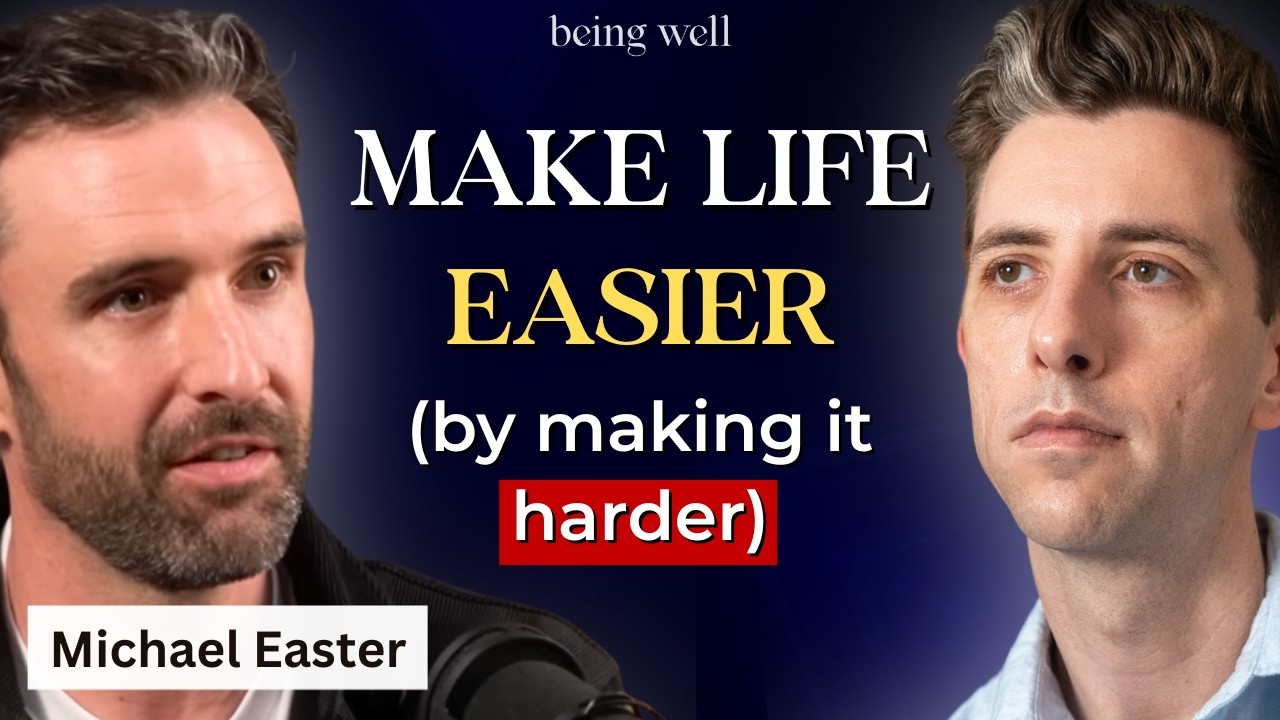
Embracing Productive Discomfort with Michael Easter |
 |
|
Forrest is joined by journalist and author Michael Easter to discuss how we can make our lives better by making them (the right kind of) harder. They start with one of modern life’s paradoxes: things have gotten much easier, but this hasn’t led to more happiness or fulfillment. Michael talks about how our biological wiring backfires in today’s world of abundance, why humans need a mission, and the vital experiences we’ve lost. Other topics include problem creep, how everything has become a slot machine, rucking, and the “super medium” body. |
| Check out the Episode |
|
|
|
|
|
|
NEW FROM THE WEDNESDAY MEDITATIONS + TALKS |
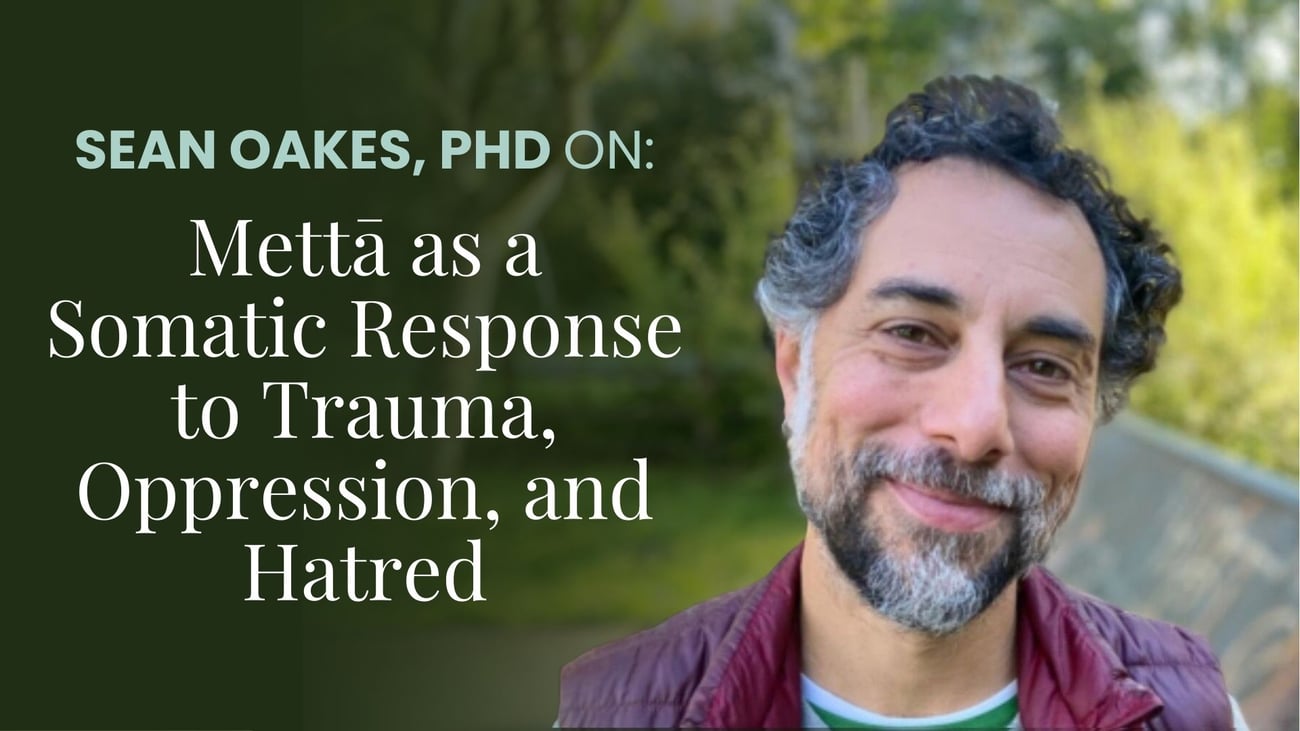
Mettā as a Somatic Response to Trauma, Oppression, and Hatred |
 |
|
Last week, guest teacher Sean Oakes offered a live meditation on Radiating Mettā Through the Whole Body, followed by a talk on Mettā as a Somatic Response to Trauma, Oppression, and Hatred, and I hope you'll check it out.
If you haven't yet, sign up to join me every week for this free, live offering.
|
| Check It Out |
|
|
|
|
|
|
MORE GOOD STUFF |
|
|
|
SCIENCE NEWS (VIEW ARCHIVE HERE)
Scientists recently discovered that some butterfly caterpillars communicate with ants using precise, rhythmic vibrations - like tiny beats or drum patterns - that mimic the ants' own signals to get protected and fed in their nests.
|
|
|
|
FOR PARENTS
The time that we learn the most about wanting is in childhood. Parents profoundly influence the skills their children develop with getting what they want, the experiences and expectations they have around wanting, and the fundamental values and aims their children acquire. Therefore, skillfully responding to child wants are the foundation of a lifetime of success and satisfaction with our wishes, hopes, and dreams.
|
|
|
|
|
|
|
HAVE YOU READ IT YET? |
Making Great Relationships |
 |
|
Learn 50 simple practices for solving conflicts, building connection, and fostering love. Available in Hardcover, Paperback eBook, and Audiobook, wherever books are sold.
|
| Get Your Copy |
|
|
|
|
|
|
WORDS OF WISDOM |
"In whatever way you find it, the possibility of joy – and of course the experience itself – can be a refuge at all times, and especially during hard ones." |
|
— RICK HANSON, PHD |
|
|
|
|
JUST ONE THING (JOT) is the free newsletter that suggests a simple practice each week for more joy, more fulfilling relationships, and more peace of mind. A small thing repeated routinely adds up over time to produce big results.
Just one thing that could change your life.
(© Rick Hanson, 2024) |
|
|
|
|
|
|
|
|


