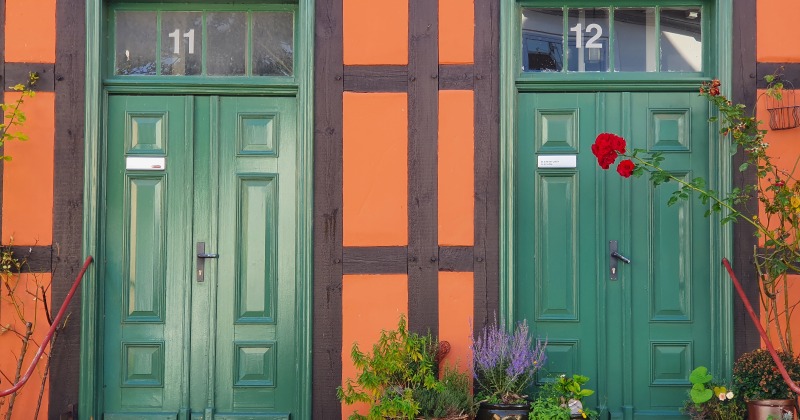
Love Your Neighbor. |
Quick note: if any of your relationships are a source of stress, friction, frustration, or disappointment... then I hope you'll check out my Strong Heart Relationship series that starts July 18, 2026.
|
|
This practice might sound extreme or pushy, and I want to tell you what I mean by it.
Everyone has lots of neighbors, and they come in many shapes and sizes. Obviously, the people living across the street are neighbors, but in some sense, so are the people you live with. Friends, relatives, co-workers, all the people you know are neighbors. So are the people at the market or walking past on the street. Other living things are neighbors as well, such as cats and dogs, birds and bees, ants on the kitchen counter, and plants and trees.
There’s also a neighborhood inside each of us. The human body contains about 100 trillion cells – and at least as many microorganisms that are neighbors, too. Plus, consider your mind. My own mind is like a village with many characters at different stages of biological and psychological evolution, chatting or arguing with each other. All the parts of your mind – the pushy internal critic, the playful child, the longing for lasting happiness, the calm voice that talks you off the ledge – are neighbors of a sort.
In the largest sense, the neighbors of your neighbors are your neighbors, which means that every living thing is your neighbor – and mine. Wow. Walt Whitman got it right when he wrote: “I am large, I contain multitudes.”
What should we do with our neighbors? Ignore or hate them? Or recognize and love them?
The latter is sure more moral – as well as much wiser in terms of cool clear self-interest. Mess with your neighbors, and they will mess with you. Treat your neighbor with respect and goodwill – in a word, with love – while also standing up for your own fences, needs, and rights . . . and you’re most likely to build a lasting peace with them, with benefits for both of you.
The value of loving our neighbors is true at all scales. As you may know, the longer quotation I‘m drawing on comes from both the Old and New Testaments of the Bible, in which it is said, ”Love your neighbor as yourself.” I understand this as both moral instruction and a clear statement that what we do to our neighbors we do to ourselves.
If you hate or push away parts of yourself, they go underground and get smelly; the mind is like a septic tank, not a flush toilet. If you are a bad neighbor to people you know, you burn bridges and end up alone. In terms of your country and world, as Gandhi said: “An eye for an eye only ends up making the whole world blind.” And if humans drive neighboring plant and animal species into extinction, we poison the wellsprings of our own survival. |
So, how do you do it? |
|
I’ve written already about making peace with - in a sense, loving – the parts of your own mind; if you like, check out Forgive Yourself, Embrace Fragility, Know You’re a Good Person, Don’t Beat Yourself Up, and Trust Yourself. I’ll leave the topic of neighborliness with the human microbiome – all the little critters inside – to others who (unlike me) know what they’re talking about. And I’ve written a fair amount about relationships with our closest neighbors – friends, family, and co-workers – including Put No One out of Your Heart, Accept Them as They Are, Speak Wisely, Admit Fault and Move On, and Forgive.
So I’ll focus here on wider circles of neighbors: the other humans in a country and world, and our planet’s other living things.
We begin with compassion. I once asked a teacher of mine what he was focusing on in his personal practice, and he said, “I stop for suffering.” It takes both benevolence and courage to keep your heart open to the pain of another being – especially those who have harmed you or others. Even if you can’t do a single thing, your compassion is still real and still matters.
Next, we recognize injustice. We try to be strong enough to tolerate the alarm, moral disgust, and outrage that’s natural to feel when hearing about hungry children, tsunamis and famines, and bombs falling on refugees to prop up a dictator. And big enough to recognize injustices suffered by our adversaries, whether at home or abroad.
Then we do what we can. That could be political action, such as encouraging more people to vote; for example, about 100 million Americans could have voted in the recent Presidential election but did not do so. Or it could be supporting a cause close to your heart. Personally, I feel strongly about the religious persecution and oppression in Tibet, and contribute to the International Campaign for Tibet.
We can also take local actions related to global issues. For example, human activity currently produces about 100 million tons of carbon dioxide a day – 40 billion tons each year – roughly half of which stays in the air to cause global warming while a quarter sinks into and acidifies the oceans. Among other consequences, this will cause mass extinctions of plant and animal species. It’s easy and eye-opening to calculate the “carbon footprint” of your own household. In addition to shrinking it, you can “offset” it through organizations that plant trees or build clean energy projects; it costs just $30 or so a month to offset the footprint of a typical American household.
Loving your neighbors – all of them, the great and the small, seen and unseen, liked and disliked – expresses inner freedom. Watching politicians on the news, sometimes I think to myself, “You can’t stop me from loving you – or from doing what I can to defeat you the next time around.”
Hate in all its forms poisons the heart, while love protects and feeds it – and strengthens us to stand up for others and stand up to others. The more bitter the times and the more divisive the conflicts, the more urgent it is to be neighborly, with clear eyes and a kind heart. Then in a deep sense, you’re at home wherever you go. |
| Read This Online |
|
Share on Facebook | Forward this Email |
|
|
|
|
|
|
MORE GOOD STUFF |
|
|
The Sweet Power of Kindness, Compassion, and Happiness for Others
We often think of kindness and compassion as gifts we offer other people. But what if they were also among the most powerful ways to heal ourselves?
In this talk, I explore three transformative qualities of the heart—kindness, compassion, and joy for others—and how intentionally cultivating them can reduce suffering, build resilience, and gradually become part of who we are. Along the way, we’ll look at practical ways to bring these qualities into difficult relationships without pretending, bypassing, or sacrificing healthy boundaries.
Check it out here | Join the Wednesday Talks for Free
|
|
|
SCIENCE NEWS: International Team Sheds Light on How Planet Survived Its Star’s Death
Like a cosmic lesson in resilience, a Jupiter-sized planet survived its star’s death and now orbits the fading remnant - a glimpse of hope that even after endings, new chapters can unfold.
(View the Science News Archive)
|
|
|
FOR PARENTS: Building Good Will
Things can be irritating. Daily life alone has its stresses, and it seems like there’s more of a general uneasiness about how things are going that makes people more edgy and aggressive. Here’s a list of “21 Ways To Turn Ill Will to Good Will.”
|
|
|
|
|
|
|
NEW BOOK AVAILABLE FOR PREORDER |
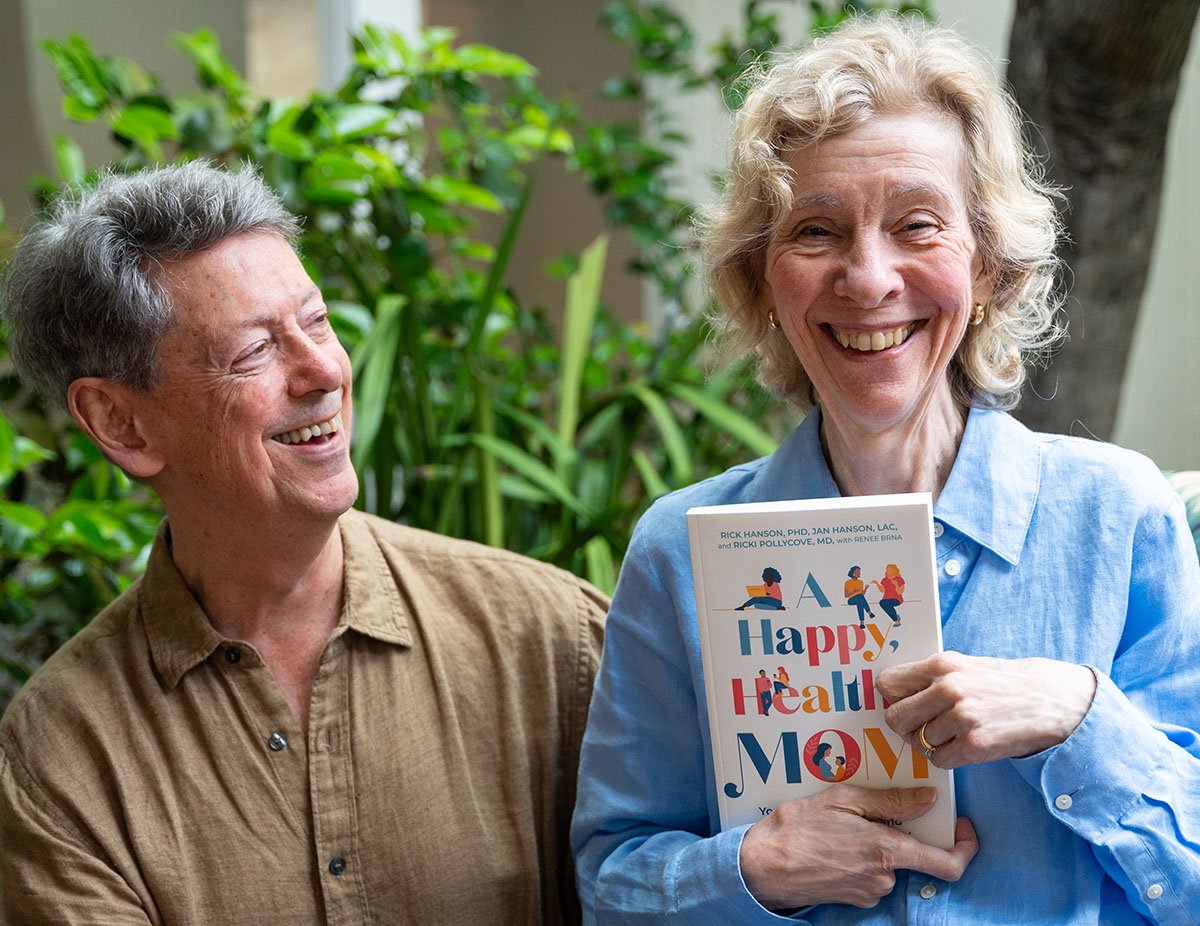
A Happy, Healthy Mom |
 |
|
We wrote this book for moms who feel exhausted, overwhelmed, or stretched too thin during the early years of raising a child. My wife Jan (a nutrition expert), friend Ricki Pollycove (a gynecologist-obstetrician), and I hope this will help moms reconnect to their own needs, restore their energy, reduce stress, and feel more supported — physically and emotionally. If you're a mom - or know one who could use some more support, I hope you'll check it out!
|
| Preorder Your Copy |
|
|
|
|
|
|
NEW ON THE PODCAST |
|
|
|
EPISODE 480:
Dr. Rick and Forrest continue last week’s conversation on avoidance coping, this time focusing on how to face the fear you keep avoiding and move from insight into meaningful action. |
|
> Listen Now |
|
|
|
|
JUST ONE THING (JOT) suggests a simple practice each week for more joy, more fulfilling relationships, and more peace of mind. A small thing repeated routinely adds up over time to produce big results.
Just one thing that could change your life.
(© Rick Hanson, 2026) |
|
|
|
|
|
|
|
|