|
If you know you need better boundaries but struggle to set them - and not feel guilty about it - I hope you'll check out my upcoming, LIVE workshop on Setting Healthy Boundaries. In it, I'll teach you how to protect your time, energy, and emotional well-being... in a way that makes your relationships stronger and more sustainable. |
|
|
|
|
|
|
Everyone knows what it’s like to care about someone. Remember being with a friend, a mate, a pet: you feel warmly connected and want him or her not to suffer and to be happy.
On the other hand, you’ve probably had the sense, at one time or another, of not being cared about. That you didn’t matter to another person or a group of people. Maybe they weren’t actively against you, but they sure weren’t for you.
As soon as you recall a time like that, it’s immediately clear why it’s important to feel cared about – which is to the heart what water is to your body.
Sometimes we feel embarrassed about our yearnings to be cared about. But they are completely normal – and deeply rooted in evolution. Love, broadly defined, has been the primary driver of the development of the brain over the last 80 million years.
Our ancestors – mammals, primates, hominids, and humans – survived and flourished and passed on their genes by learning to find good mates, bond with their young, draw males in to provide for children, create “the village it takes to raise a child” whose brain is quadrupling in size after birth and thus needs a long and vulnerable childhood, and team up with each other to compete with other bands for scarce resources.
In this context, being cared about was crucial to survival. Mammals, etc., that did not care about being cared about did not pass on their genes. No wonder you care about being cared about!
Studies show that feeling cared about buffers against stress, increases positive emotions, promotes resilience, and increases caring for others. Plus it feels darn good. And over time, feeling cared about today can gradually fill any holes in your heart left over from childhood (or last job, or last marriage) in which the caring felt like a thin soup. |
So, how do you do it? |
|
Let’s start with the hard part: opening to feeling cared about often brings up not feeling cared about. Those feelings are real, and they’re based on real things, like having a disengaged or critical parent or being left out in school social situations. It’s important to accept those feelings, and hold them as best you can in a large space of awareness so they are not so overwhelming.
Then, take a breath, and turn to the other side of the truth: the ways and times you have been cared about. Those really exist! They do in everyone’s life. The caring may not have been perfect or sustained, so it could be tempting to discount it or push it away as not good enough. (And we have to watch out for tendencies in the mind to hold on to grievances and reproaches that harm us more than anyone else – including the people we may want to punish.) But the caring that was present amidst everything else was indeed the real deal. And you, like everyone else, need to take that in as the living food every heart must have.
For starters, recall being with someone who is (or was) caring toward you. Perhaps a grandparent making cookies, or a parent, friend, teacher, sibling, mate, child, or pet. Or a spiritual being or presence.
Then open to feeling cared about. What does your body do when someone cares about you? What kind of thoughts or attitudes go through your mind? What’s your emotional response to being cared about? Know what it feels like to be cared about so you can find your way back here again.
Then, this week, look for opportunities to feel cared about. Most of these will be small, passing moments when someone is sincerely thoughtful, friendly, or concerned. Look behind the eyes of people, and see the human caring for you when it’s there – even if it’s masked behind formalities, a prickly personality, too many words, or no words at all.
When it’s there, take it in. Let the feelings, body sensations, and thoughts of being cared about soak into you, like swallowing water on a hot and thirsty day.
And then each night, before you fall asleep, take a moment to call to mind again the sense of being cared about – resting in that feeling as it weaves its way into your breathing, body, and dreams.
|
| Read This Online |
|
Share on Facebook | Forward this Email |
|
|
|
|
|
|
MORE GOOD STUFF |
|
|
 |
|
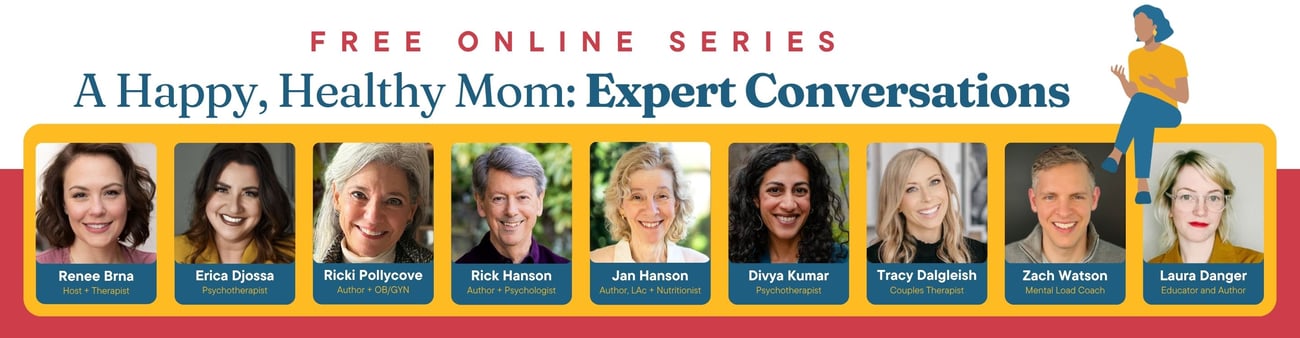
Sleepless nights, endless task lists, the weight of a household… a lot of moms constantly feel frayed — tired in a way that sleep doesn’t fix, disconnected from a partner, or quietly convinced that this exhaustion is just how it is now.
Based on the book A Happy, Healthy Mom, this series brings together clinicians, therapists, and authors who work with mothers every day, for honest conversations about what depletion actually looks like — and the practical, specific ways to get support again.
Check it out here
|
|
|
Why It’s So Hard to Set – and Keep – Healthy Boundaries
Most of us know, at least in principle, that it’s good to have healthy boundaries. The hard part is actually setting them — and then holding onto them when other people push back, get upset, or simply keep doing what they’ve always done.
In this talk, I explored some of what makes boundaries so difficult, including feeling overly responsible for other people, doubting our own perceptions, and getting pulled into trying to change things that really aren’t in our control.
Check it out here | Join the Wednesday Talks for Free
|
|
|
FROM SUBSTACK: What Gives Me the Right to Protect My Own Peace?
I was about six years old, standing outside my family’s home in Illinois. My younger sister was in the home, my mom and my dad. I can look back and see the yellow light coming out of the windows, the sun setting, dusk, and we were on the edge of a cornfield. I could see the rutted, cold, if not even frozen mud, with little bits of water in it, reflecting the lights of the homes in the hills in the distance.
And in that experience, very soft, poignant, wistful, was a knowing that the unhappiness in that home over there was not my doing. There was no abuse, no trauma. There was the ordinary wrangling of two young parents who themselves didn’t have strong family support. There was no village to raise the child. They were under a lot of pressure. I have no rancor for them at all, just, factually, that unhappiness is not mine. I’ve got to deal with it, but it’s not mine. That was very real in me. Okay. I’ve got to take care of myself for the next 10 or 12 years, until I can move on toward more of my own kind of family, my own kind of relationships, out there in the world.
Read more | Subscribe to My Substack
|
|
|
SCIENCE NEWS: What Insects Can Teach Us About Better Decisions
Insects such as ants, fruit flies, cockroaches can offer us surprising lessons in wise decision-making, showing how cooperation, flexibility, and mindful attention can help us navigate life with greater clarity.
(View the Science News Archive) |
|
|
FOR PARENTS: Parenting from the Same Page
Past articles have explored effective ways parents can communicate and negotiate with each other. In this article, we will apply these methods to the sometimes thorny issues of childrearing practices, who does what, sharing the load fairly, and money.
|
|
|
|
|
|
|
NOW AVAILABLE TO PURCHASE! |
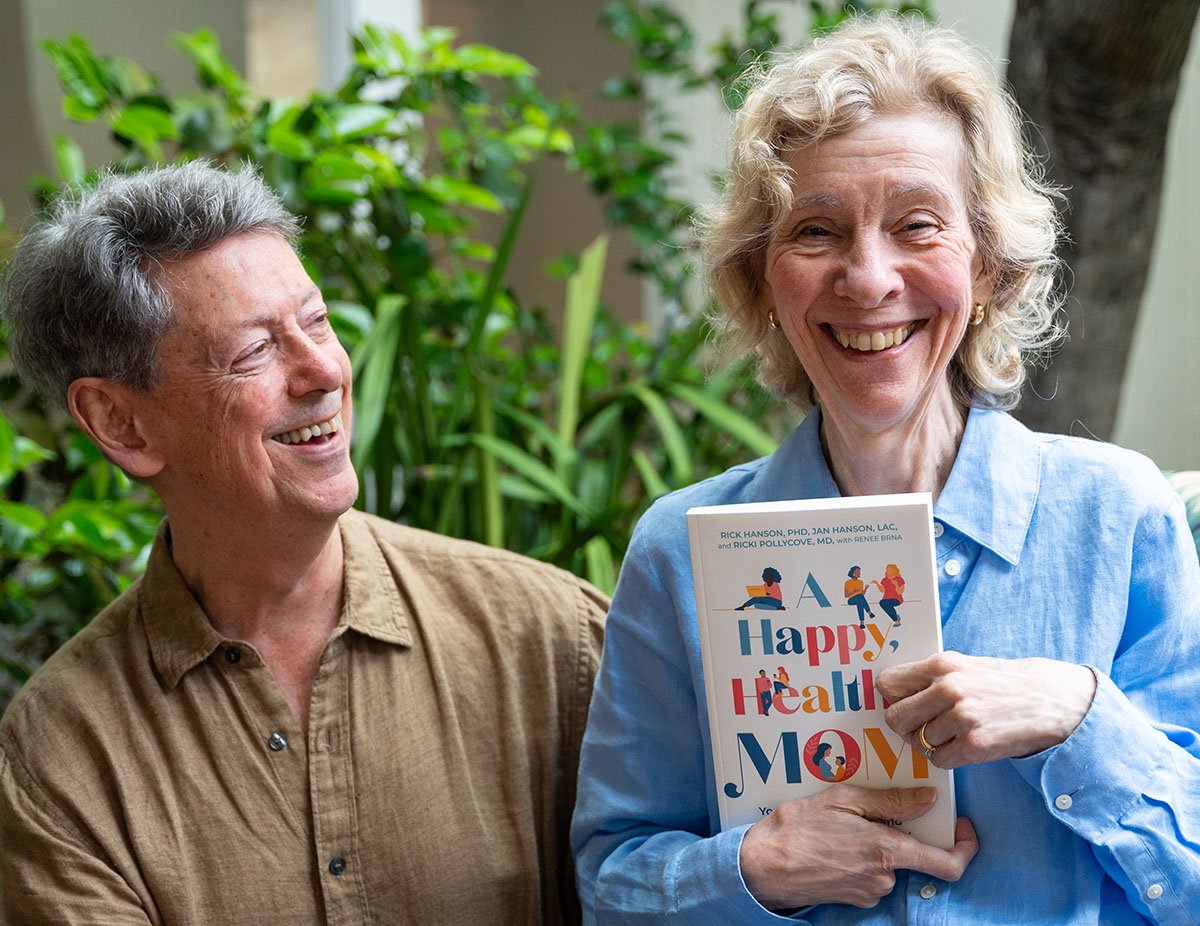
A Happy, Healthy Mom |
 |
|
We wrote this book for moms who feel exhausted, overwhelmed, or stretched too thin during the early years of raising a child. My wife Jan (a nutrition expert), friend Ricki Pollycove (a gynecologist-obstetrician), and I hope this will help moms reconnect to their own needs, restore their energy, reduce stress, and feel more supported — physically and emotionally. If you're a mom - or know one who could use some more support, I hope you'll check it out!
|
| Get Your Copy |
|
|
|
|
|
|
NEW ON THE PODCAST |
|
|
|
EPISODE 488:
Dr. Rick and Forrest talk about what separates people-pleasing from the fawn response, and why those differences affect what actually helps. They trace the surprising history behind both ideas, explain each’s relationship with trauma, and answer common questions along the way. They discuss why old friendships pull you back into old patterns, when appeasement is actually the right call, how to assert your needs when people expect you to concede, and how to figure out what you want after a lifetime of tuning into everyone else. |
|
> Listen Now |
|
|
|
|
JUST ONE THING (JOT) suggests a simple practice each week for more joy, more fulfilling relationships, and more peace of mind. A small thing repeated routinely adds up over time to produce big results.
Just one thing that could change your life.
(© Rick Hanson, 2026) |
|
|
|
|
|
|
|
|