Know You're a Good Person |
|
|
|
|
|
|
For many of us, perhaps the hardest thing of all is to believe that "I am a good person." We can climb mountains, work hard, acquire many skills, and act ethically - but truly feel that one is good deep down? Nah!
We end up not feeling like a good person in a number of ways. For example, I once knew a little girl who'd been displaced by her baby brother and fended off and scolded by her mother who was worn down and busy caring for an infant. This girl was angry at her brother and parents, plus lost and disheartened and feeling cast out and unloved. She'd been watching cartoons in which the soldiers of an evil queen attacked innocent villagers, and one day she said sadly, "Mommy, I feel like a bad soldier."
Later in life – whether in school or adulthood – shamings, moral indictments, religious chastising, and other criticisms come in many shapes and sizes. Feeling morally compromised – the essence of not believing you’re a good person – is fed by related though different experiences of worthlessness, inadequacy, and unlovableness: as my ranch-born father would say, “feeling like you’re the runt of the litter.”
I’ve also known people – including myself – who have done bad things or said them or thought them. Things like hitting an animal, risking the lives of their children while driving buzzed, being mean to a vulnerable person, stealing from a store, feeling contemptuous, or cheating on a partner. These don’t need to be felony offenses to make one feel guilty or ashamed.
In effect, to simplify, it’s as if the psyche has three parts to it: one part says, “you’re not good”; another part says, “you’re good”; and a third part – the one we identify with – listens. The problem is that the critical, dismissive, shaming voice is usually much louder than the protecting, encouraging, and valuing one.
Sure, there is a place for healthy remorse. But shining through our lapses of integrity, no matter how great, is an underlying and pervading goodness. Yes, it may be obscured; I am not letting myself or others – from panhandlers to CEOs and Presidents – off the moral hook. But deep down, all intentions are positive, even if they are expressed in problematic ways. When we are not disturbed by pain or loss or fear, the human brain defaults to a basic equilibrium of calm, contentment, and caring. And in ways that feel mysterious, even numinous, you can sense profound benevolence at your core.
Really, the truth, the fact, is that you are a good person. (Me, too.)
When you feel deep down like a bad soldier – or simply not like a good person – you’re more likely to act this way, to be casually snippy, self-indulgent, selfish, or hurtful. On the other hand, when you feel your own natural goodness, you are more likely to act in good ways. Knowing your own goodness, you’re more able to recognize it in others. Seeing the good in yourself and others, you’re more likely to do what you can to build the good in the world we share together. |
So, how do you do it? |
|
I've learned five good ways to feel like a good person - and there are probably more!
- Take in the good of feeling cared about - When you have a chance to feel seen, listened to, appreciated, liked, valued, or loved: take a dozen seconds or more to savor this experience, letting it fill your mind and body, sinking into it as it sinks into you.
- Recognize goodness in your acts of thought, word, and deed - These include positive intentions, putting the brakes on anger, restraining addictive impulses, extending compassion and helpfulness to others, grit and determination, lovingness, courage, generosity, patience, and a willingness to see and even name the truth whatever it is. You are recognizing facts; create a sanctuary in your mind for this recognition, holding at bay other voices, other forces, that would invade and plunder this sanctuary for their own agenda (such as the internalization of people you’ve known who made themselves feel big by making you feel small).
- Sense the goodness at the core of your being - This is a fundamental honesty and benevolence. It’s there inside everyone, no matter how obscure. It can feel intimate, impersonal, and perhaps sacred. A force, a current, a wellspring in your heart.
- See the goodness in others - Recognizing their goodness will help you feel your own. Observe everyday small acts of fairness, kindness, and honorable effort in others. Sense the deeper layers behind the eyes, the inner longings to be decent and loving, to contribute, to help rather than harm.
- Give over to goodness - Increasingly let “the better angels of your nature” be the animating force of your life. In tricky situations or relationships, ask yourself, “Being a good person, what’s appropriate here?” As you act from this goodness, let the knowing that you are a good person sink in ever more deeply.
|
| Read This Online |
|
Share on Facebook | Forward this Email |
|
|
|
|
|
|
MORE GOOD STUFF |
|
|
Why Good Boundaries Make Better Relationships
Good boundaries aren’t about pushing people away. In fact, they can help us feel closer, more open, and more at ease with the people we care about. When you know where you stand, what you’re responsible for, and what you’re simply not going to take on, there’s less resentment, confusion, and pressure in a relationship. So that’s what I covered in my talk this week, including how to recognize what’s okay, what’s not, and what is – as I like to put it, NMJ – Not My Job.
Boundaries can be challenging, especially with the people we love, but they can also bring a lot more freedom, peace, and genuine connection into our relationships.
Check it out here | Join the Wednesday Talks for Free
|
|
|
FROM SUBSTACK: Why Does Saying No Feel So Dangerous?
I got an email recently from a longtime listener, a woman in her seventies, who wrote to say she appreciates my focus on what’s beneficial, on saying yes to those aspects of life. And then she said something that’s stuck with me since. She wrote that it’s also really important to appreciate the value, not just of yes, but of no. For many, many women, she said, including women of her age, and women and girls in general, it’s really important to be able to say no, and to live it.
Read more | Subscribe to My Substack
|
|
|
SCIENCE NEWS: Atoms in Space Give Galileo’s Gravity Test a New Twist
Aboard China’s Tiangong space station, scientists found that two different kinds of ultracold atoms fell almost exactly alike - an elegant, down-to-earth reminder that gravity’s deepest rules hold steady from the vastness of space to the tiny quantum world.
(View the Science News Archive)
|
|
|
FOR PARENTS: A Father’s Story
A father or partner usually feels a withdrawal of their partner’s attention and energy after children. When their partner pulls away from them through involvement with the child, a partner can feel hurt and angry. So what’s a partner to do?
|
|
|
|
|
|
|
NOW AVAILABLE TO PURCHASE! |
A Happy, Healthy Mom |
 |
|
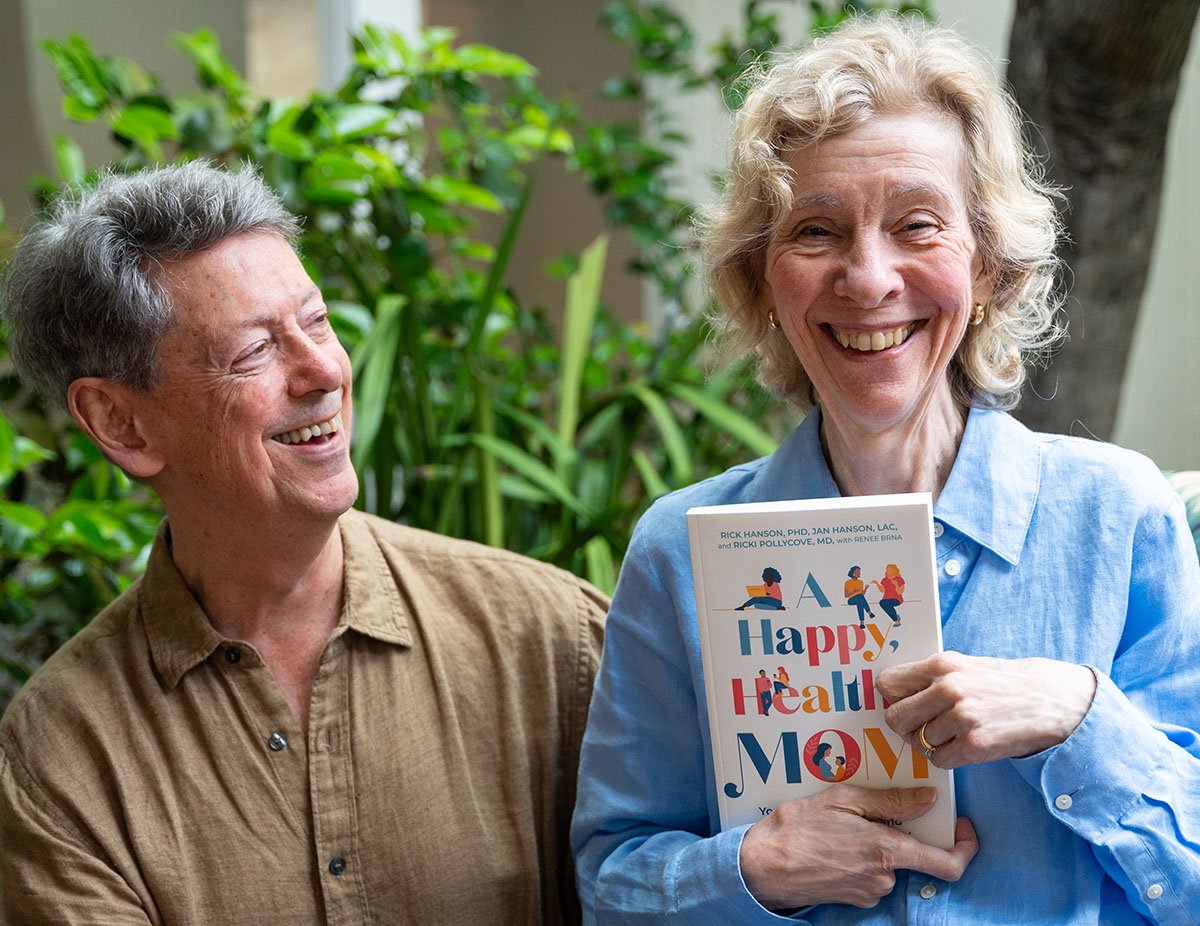
We wrote this book for moms who feel exhausted, overwhelmed, or stretched too thin during the early years of raising a child. My wife Jan (a nutrition expert), friend Ricki Pollycove (a gynecologist-obstetrician), and I hope this will help moms reconnect to their own needs, restore their energy, reduce stress, and feel more supported — physically and emotionally. If you're a mom - or know one who could use some more support, I hope you'll check it out!
|
| Get Your Copy |
|
|
|
|
|
|
NEW ON THE PODCAST |
|
|
|
EPISODE 487:
Forrest is joined by his parents, psychologist Dr. Rick Hanson and nutritionist Jan Hanson, to discuss “Depleted Mother Syndrome:” the exhaustion, brain fog, and low mood so many mothers experience. They talk about how Jan hit bottom in the years after Forrest and his sister were born, why the hardest stretch often comes two or more years after birth, the problem with dismissing these experiences as “just motherhood,” and how people can recover. |
|
> Listen Now |
|
|
|
|
JUST ONE THING (JOT) suggests a simple practice each week for more joy, more fulfilling relationships, and more peace of mind. A small thing repeated routinely adds up over time to produce big results.
Just one thing that could change your life.
(© Rick Hanson, 2026) |
|
|
|
|
|
|
|
|