Be Helpful. |
|
Quick note: if you have a relationship in your life that is a source of stress, friction, frustration, or disappointment... then I hope you'll check out my Strong Heart Relationship series that starts next month. (And it's half-off right now).
I'm doing a series on my personal top five practices (all tied for first place). I have so far named three: meditate (including mindfulness, self-awareness, and, if you like, prayer), take in the good, and bless (including compassion, generosity, and love).
I saw one way to bless on a trip to Haiti in the efforts of many dedicated people: be helpful. As you probably know, Haiti is the poorest country in the Western Hemisphere, with roughly 80% unemployment. The national government seemed like a tattered sheet in the wind. The public middle and high schools I visited were missing half their schoolbooks as well as the funds for the last two grades. Imagine your own child in such a school . . . and that the $30 it takes to buy the books she needs is a month's wages, as out of reach as the moon.
Yet in the face of these enormous challenges, I met so many people - both in NGOs and in everyday life - who kept doing whatever they could to help things get better each day. I was humbled by their heart and their efforts. And especially by the joy they could still find even in hard, hard conditions. It reminded me of this story:
Two women are walking along a beach after a storm swept countless starfish up onto the sand, now dying in the sun. As they talk, one reaches down every few paces to pick up a starfish and flick it back into the sea. After a while, her friend points at the miles of beach and bursts out, "Why do you bother?! You're not making any difference!" Her friend replies, "It makes a big difference to the ones I touch."
One of the most remarkable things about human beings is that we do bother. Our altruism is unique among vertebrates. An early MRI study on compassion showed that it warmed up the motor circuits of the brain, readying them for action: we don't just feel the suffering of others; we want to help. |
So, how do you do it? |
|
In the words of Nkosi Johnson, a South African boy born with HIV who became an advocate for children with that illness before he died at about age 12: Do all you can, with what you have, in the time you have, in the place where you are.
Do not underestimate the impact of a small deed. Think of a turning point in your own life in which another person did something objectively small - helped you fill out a form, offered an encouraging word, invited you to a meeting, mentioned an opportunity - that had big benefits for you.
In everyday life, look for small concrete physical things that would contribute to others. Empty the dishwasher, give someone a ride, or scratch someone's back.
Also, look for places where restraint would help, such as not interrupting or not trying to win the argument.
Include inner actions, such as giving full attention instead of letting your mind wander or mobilizing authentic interest in conversation or romance, even if that wasn't your initial impulse.
Pick a relationship or situation and ask yourself, what could I do to help? Maybe an elderly relative is bored and lonely, or a friend needs a jump-start in clearing out a garage, or a co-parent is carrying too many tasks and too much stress.
And look for leveraged effects, where something small for you is big for someone else. For example, I've seen families in which one parent averages 60-70 hours/week on the job (including commute and travel), and dialing back the workweek by 10% increases the parent's time with the kids by 100%.
As to the larger world, this idea of leveraging brings me back to Haiti - and to the extraordinary staff and work of Plan International, the NGO I support there. It's just a dollar a day for me - but that's roughly a day's wage in many parts of the world. You probably have your own ways of helping, whether at home or abroad, with money or time or other means. We all know that the needs are great.
And so are the opportunities to make a big difference to the ones we touch. |
| Read This Online |
|
Share on Facebook | Forward this Email |
|
|
|
|
|
|
MORE GOOD STUFF |
|
|
Insightful Freedom from Craving
Do you ever feel caught up in striving, worrying about how you’re doing, or trying to become a better version of yourself? In this talk, I explore an early Buddhist teaching on how craving and self-identification create suffering—and how loosening our grip on who we think we are can bring greater freedom, peace, and genuine happiness.
Check it out here | Join the Wednesday Talks for Free
|
|
|
SCIENCE NEWS: Older Adults Recall More in Real Life
Researchers have recently found that older adults may remember their life experiences better in everyday life than lab tests suggest. In normal conversations and smartphone check-ins, they often described past events with as much or even more detail than younger adults, so lab studies may be missing the full picture.
(View the Science News Archive)
|
|
|
FOR PARENTS: Talking About Parental Values
Parents often work out their differences informally, but sometimes, you’d benefit from a process that’s a little more structured. Try to set aside time to talk about the values that guide your parenting, using these questions.
|
|
|
Positive Neuroplasticity Training
PositiveNeuroplasticity.com provides resources and real-life accounts for using positive brain change in your everyday life. Classes and one-on-one counselling are also available to deepen your learning.
|
|
|
|
|
|
|
NEW BOOK AVAILABLE FOR PREORDER |
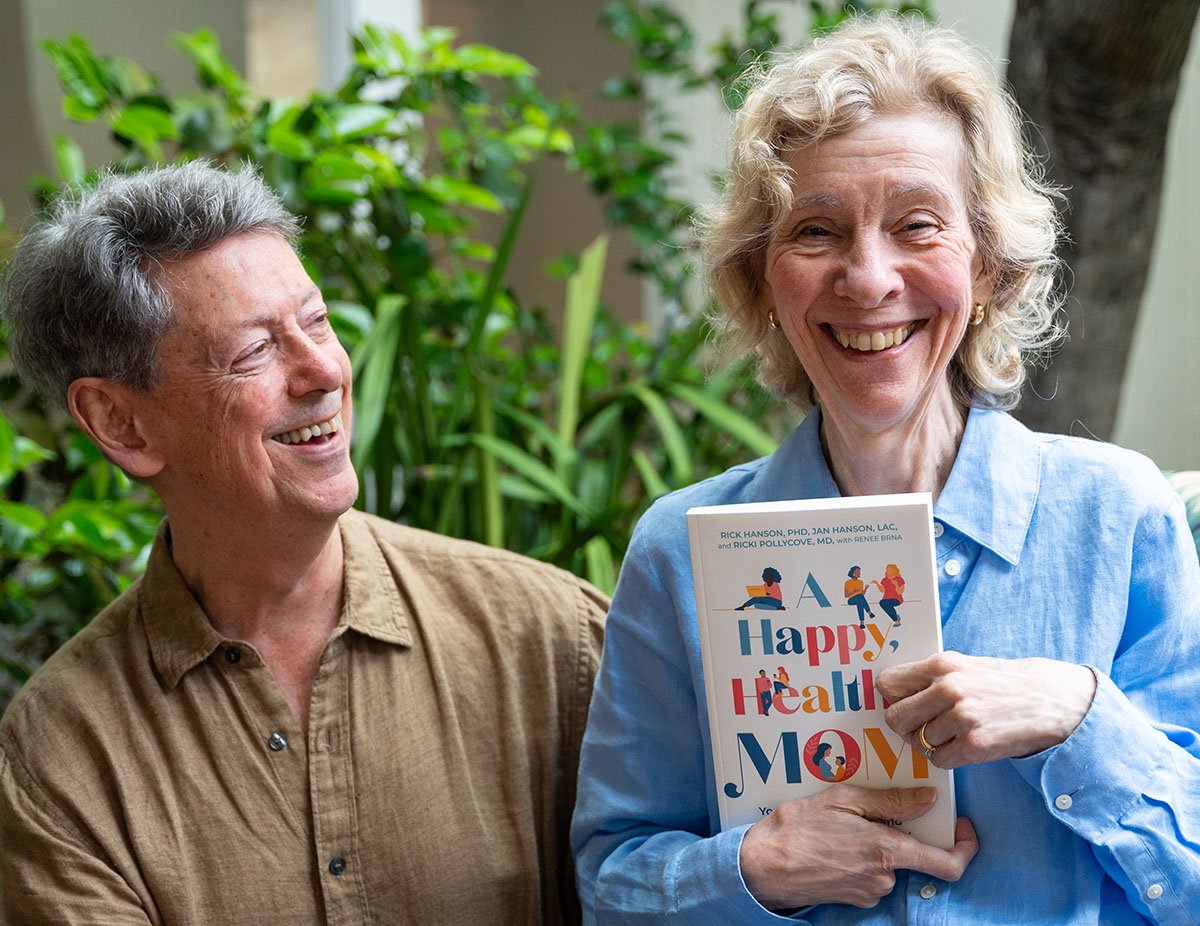
A Happy, Healthy Mom |
 |
|
We wrote this book for moms who feel exhausted, overwhelmed, or stretched too thin during the early years of raising a child. My wife Jan (a nutrition expert), friend Ricki Pollycove (a gynecologist-obstetrician), and I hope this will help moms reconnect to their own needs, restore their energy, reduce stress, and feel more supported — physically and emotionally. If you're a mom - or know one who could use some more support, I hope you'll check it out!
|
| Preorder Your Copy |
|
|
|
|
|
|
NEW ON THE PODCAST |
|
|
|
EPISODE 477:
Dr. Rick and Forrest focus on the key to successful relationships: repair. In this episode, they offer the practical how-to of effective repair: what it looks like, why it’s so hard, and how to do it well. |
|
> Listen Now |
|
|
|
|
JUST ONE THING (JOT) suggests a simple practice each week for more joy, more fulfilling relationships, and more peace of mind. A small thing repeated routinely adds up over time to produce big results.
Just one thing that could change your life.
(© Rick Hanson, 2026) |
|
|
|
|
|
|
|
|